
When AI Spending Caps Become Permission Systems: Control Runaway Tokens Without Capping Experimentation

Up to 30 times. That is how much token consumption can vary across repeated runs of the same task, according to Stanford's analysis of agent token use. The variance is not a footnote. It makes blunt cost controls tempting.
Atlassian reportedly gives research and development staff monthly AI wallets ranging from $500 to $2,000, depending on role. The wallet warns employees as they approach the limit, then pauses usage when the allocation runs out, according to The Guardian's report. The system also includes a route to request more funds.
That is a sensible response to unpredictable infrastructure cost. It is also a potentially dangerous way to govern experimentation.
The danger is not that every engineer should receive an unlimited model budget. The danger is making an individual engineer's wallet carry the burden of uncertainty that belongs to the organization's architecture, measurement, and investment decisions.
AI spending caps can become permission systems. CTOs need to control runaway tokens without teaching the people developing the next useful workflow that trying something expensive is itself a career risk.
The wallet is real. The hard ceiling is not quite.
Jack Rudenko's LinkedIn post makes a sharp argument. Rudenko argues that a flat monthly ceiling will not affect every employee equally: occasional users may never notice it, while builders running expensive agents can consume it quickly.

The mechanics behind the post are substantially supported. The Guardian describes role-based monthly allocations between $500 and $2,000, four covered AI products including Claude Code, warnings near exhaustion, and a pause when the money runs out. The report also says employees can ask for additional funds, and that no request had been rejected at the time.
That last detail matters. Calling the wallet a hard ceiling is incomplete. Calling it a visible control on usage is fair.
The strongest counterargument is in The Guardian's reporting: employees can request more, and no request had reportedly been rejected at the time. If that process is fast and routine, the wallet may function as a visibility mechanism rather than a harmful ceiling. The thesis turns on the time, friction, and perceived risk of the exception path, not on the existence of a wallet alone.
The workforce context is also real, but more complicated than the post's shorthand suggests. Atlassian's own March team update announced a reduction of approximately 10 percent, or 1,600 employees. It named investment in AI and enterprise sales, profitability, financial strength, and a reorganization of work among the reasons. Reuters reported the same headcount reduction and connected it to the company's AI and enterprise-sales pivot.
The public record does not show that the layoffs were caused by the wallets or that the wallets have suppressed experimentation. It shows Atlassian tightening visibility and pausing use at the wallet limit in the same year it restructured to self-fund AI and enterprise-sales investment. That is a management tension worth examining, not evidence of a harmful outcome.
Why leaders reach for the wallet
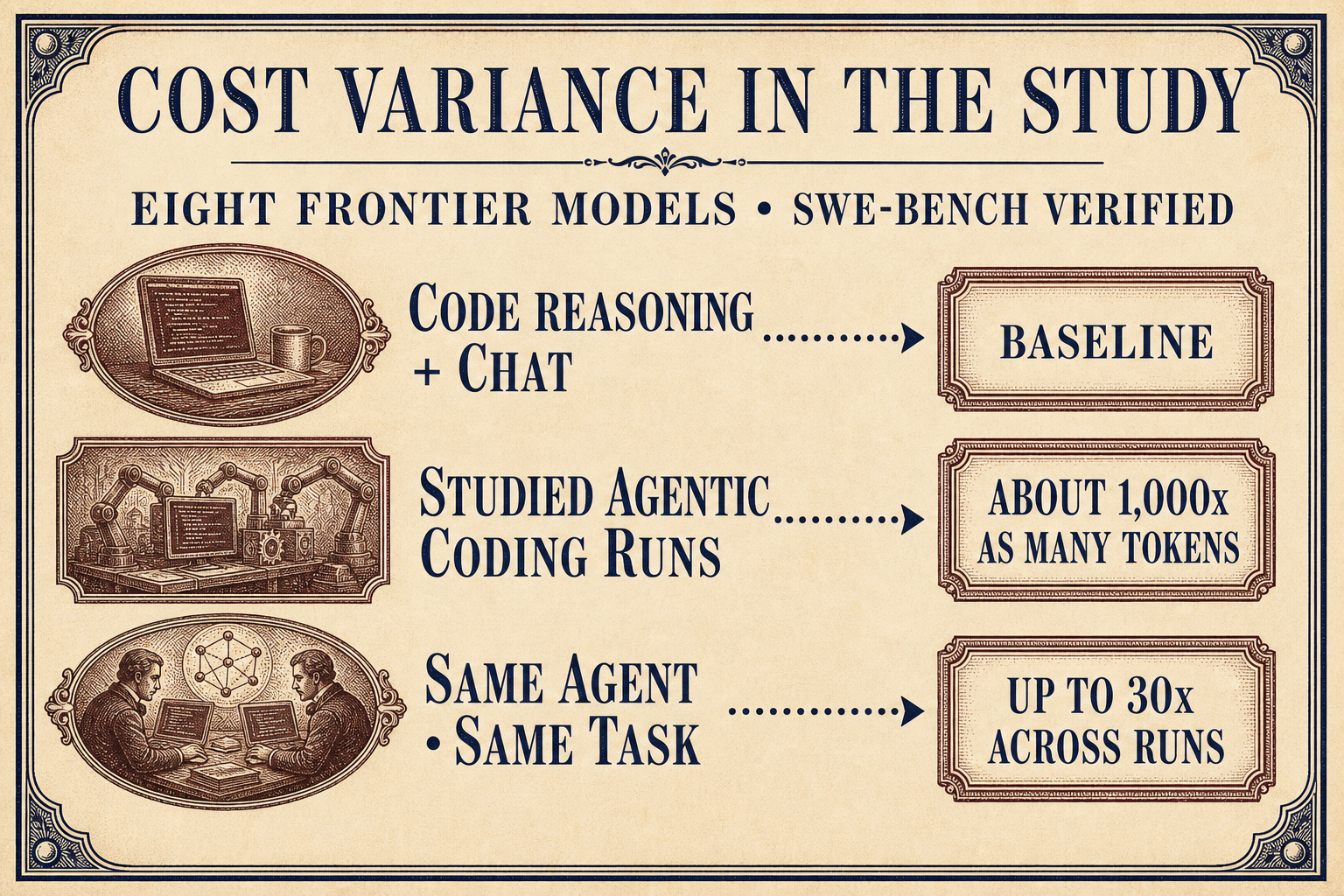
Enterprise leaders have good reasons to distrust simple AI budgets. In a preprint analyzing eight frontier models on SWE-bench Verified, researchers found that the studied agentic coding runs consumed about 1,000 times as many tokens as code reasoning and chat, and that the models systematically underestimated their own consumption. Stanford's summary of the same study reports up to 30-fold variation across repeated runs of the same agent on the same task.
This is not the old per-seat software problem. A seat has a relatively legible price. Research on agent trajectories shows why an agent has a different cost shape: its bill depends on the trajectory it takes and the context it accumulates, both of which are difficult to know in advance.
This is the cost shock described in Your AI Pilot Economics Are Lies. A small proof of concept can look cheap because it runs on curated inputs, low volume, and short trajectories. Production adds real context, retries, edge cases, and thousands of users. The budget problem is real before anyone starts arguing about management philosophy.
Token-Maxing Is Not a Strategy supplies the useful economic distinction. If inference is the product, more model usage can be a growth investment. If inference is an internal cost center, unbounded usage can become a budget crisis. The question is not whether to cap. The question is what kind of work the cap is governing.
The control surface is the problem
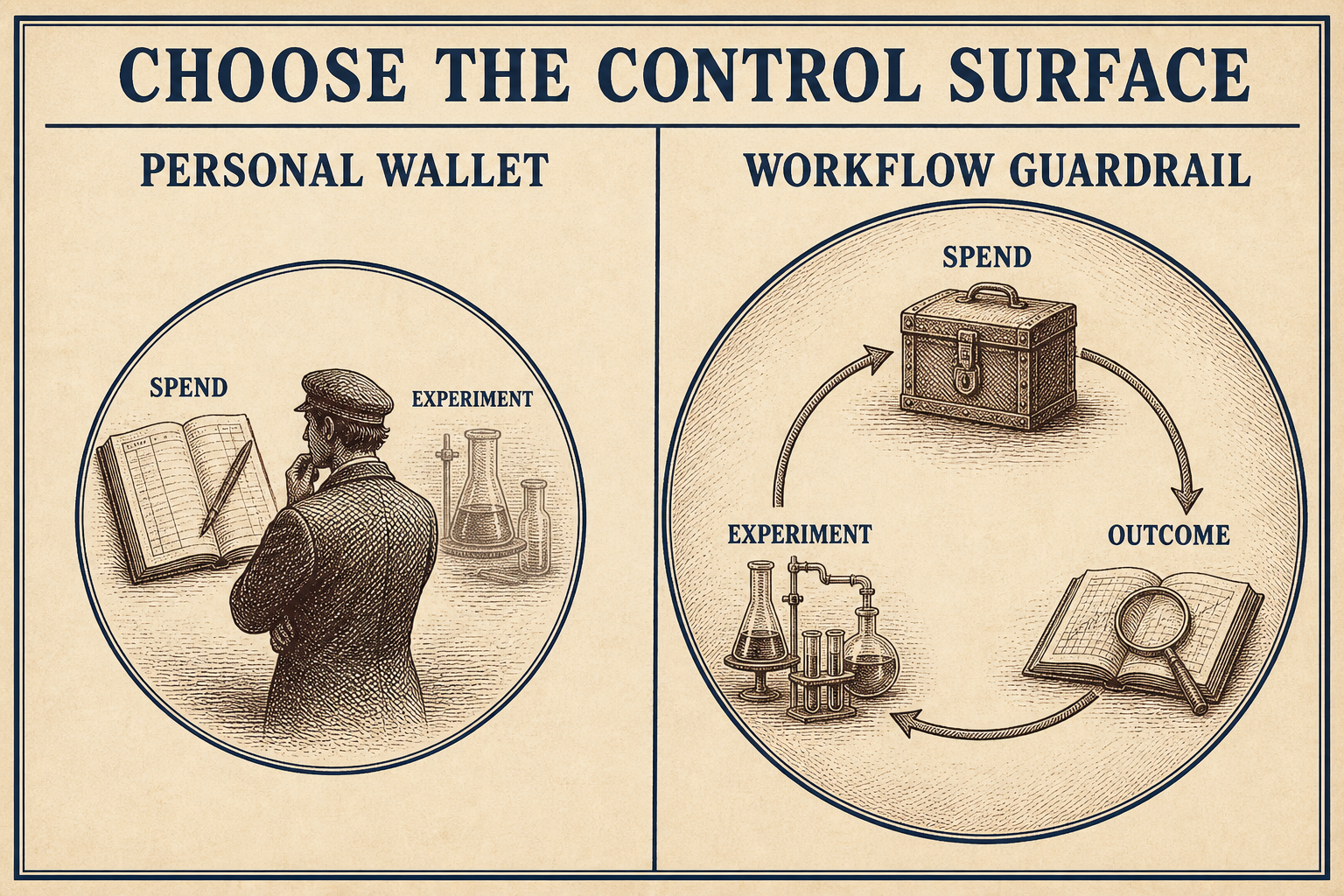
A personal wallet is attractive because it creates a number that everyone can understand. It also compresses several very different activities into one balance:
- routine assistance that should be predictable,
- production workflows that need operational guardrails,
- agent loops that may be wasteful or misconfigured,
- experiments that may fail but produce reusable knowledge, and
- tooling work that can reduce future cost for the whole organization.
The ledger sees dollars. It does not automatically see leverage.
That is why a high-spend engineer is not necessarily a high-value engineer, and a low-spend engineer is not necessarily a disciplined one. Usage is an input signal. It is not a performance review.
The Dark Factory Is Already Shipping offers a useful counterexample. Its account of StrongDM's software factory, supported by StrongDM's own factory report, describes agents generating and validating production software after humans define intent. It offers a useful example of why AI cost should be evaluated alongside output and validation, not as an isolated balance.
METR's early-2025 study found that 16 experienced open-source developers working in familiar repositories took 19 percent longer with the AI tools available during the study, despite expecting a speedup. METR now labels that result out of date and says its later data cannot reliably estimate the current effect. The durable point is narrower: perceived productivity and measured task time can diverge.
In a study of 315 employees at six ICT companies in Egypt, perceived psychological safety was positively associated with innovative work behavior, with error-risk taking in the proposed mechanism. The study does not show that Atlassian's wallet creates fear. It explains why the meaning of an overage process is a plausible design concern. A request that is fast, normal, and evidence-based is different from a request that feels like an admission of poor judgment.
What the wallet signals to the workforce
Our earlier analysis of AI employment data separated two strategies. One uses AI to substitute for workers and extract a local cost reduction. The other uses AI to augment workers, expand capacity, and make further growth rational.
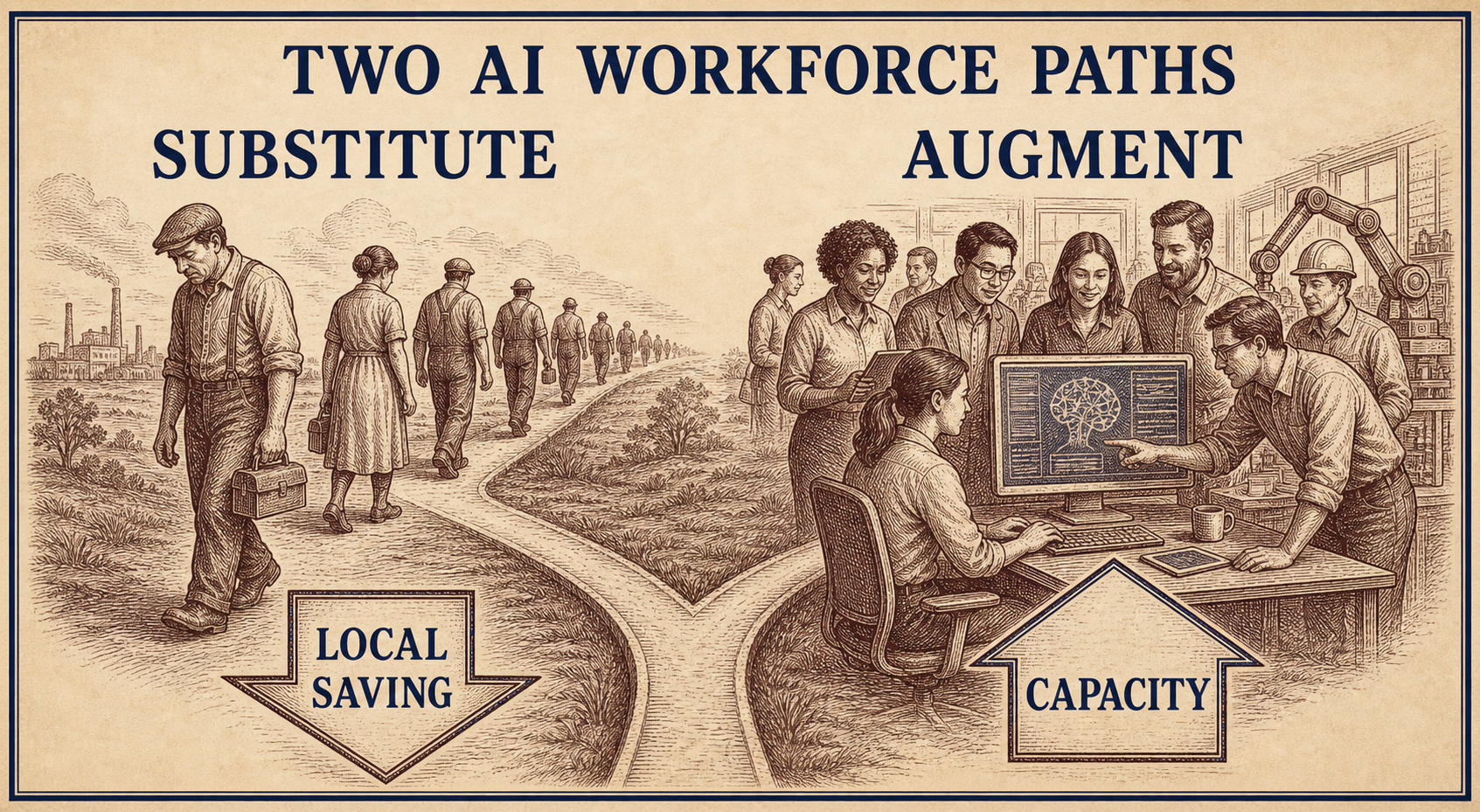
The Atlassian case does not resolve the substitution-versus-augmentation debate. Atlassian says its workforce reduction will help self-fund AI investment. Separately, The Guardian reports personal wallets with an overage route. The evidence does not show that those wallets underfund experimentation. The test for any company is whether its allowance and exception process make serious exploratory work practical or merely nominal.
Ask what the budget is meant to protect. Is it protecting the company from unbounded infrastructure cost? Then put the guardrail around the infrastructure. Is it protecting the company from low-value activity? Then measure outcomes. Is it protecting a quarterly plan from uncertainty? Then acknowledge that the organization is choosing predictability over discovery.
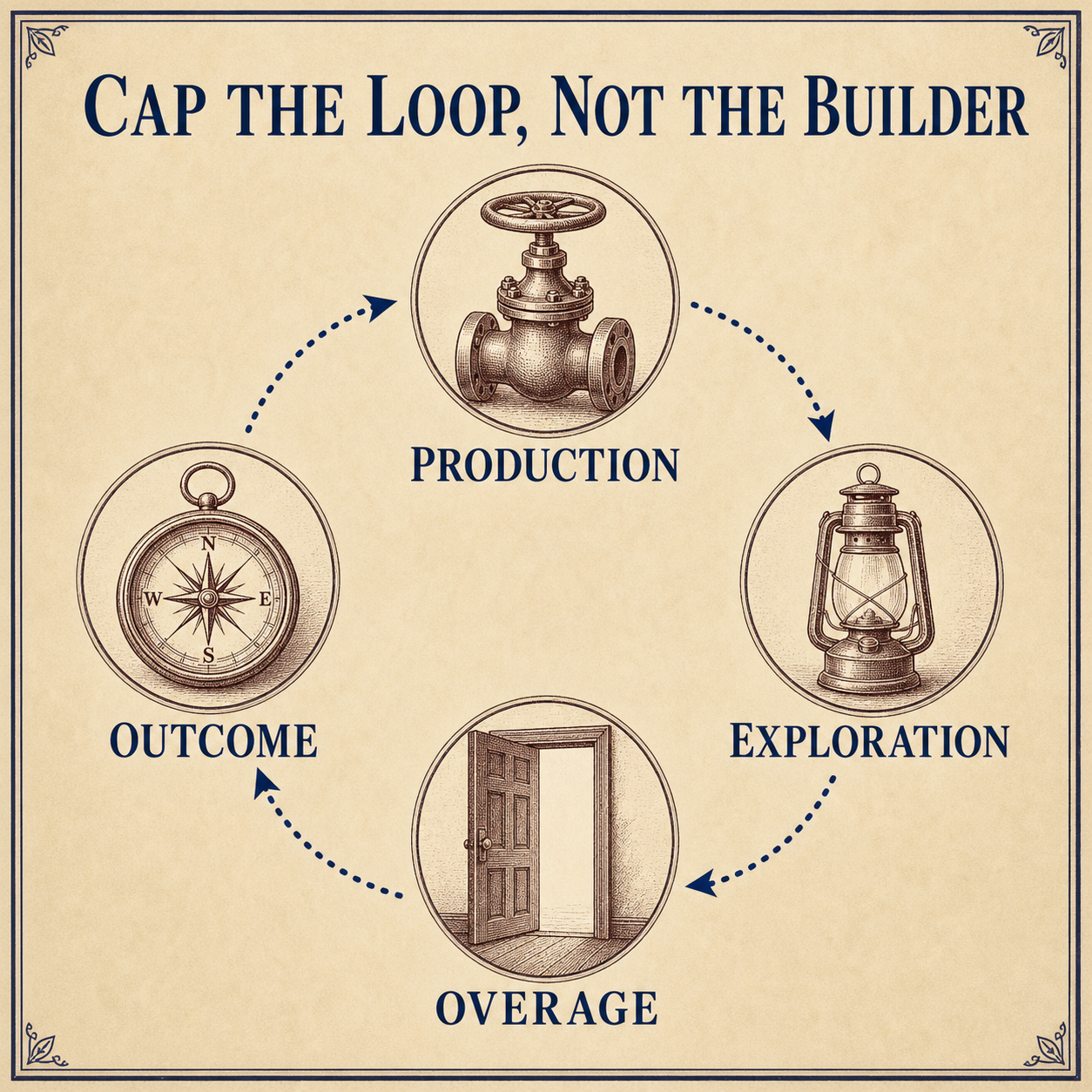
Cap the loop, not the builder
The alternative to a personal hard stop is not unlimited spending. It is a more precise budget architecture.
1. Separate production from exploration
Production agents need circuit breakers. They should have limits on retries, context growth, tool calls, concurrency, and total run cost. Those controls protect the system from a runaway loop without asking an engineer to stop learning.
Exploration needs a different envelope. Give teams a visible experimentation pool with an owner, a time horizon, and a short record of what the experiment is meant to establish. The pool can be finite without pretending that every experiment has a predictable monthly cost.
2. Pair spend with an outcome
Every important token metric needs a companion metric. Cost per run can pair with task completion. Token volume can pair with resolved incidents, reusable tooling, or validated learning. A model-selection decision can pair with quality and latency. The existing pilot-economics framework makes the same practical point: a single cost number is not a business case.
Do not use tokens as a proxy for effort, intelligence, or commitment. A long agent trajectory can be waste. It can also be the cost of testing an approach that prevents a larger failure later.
3. Make overage approval boring
An overage request should ask three questions:
- What is this spend trying to learn or deliver?
- What evidence will tell us whether it worked?
- What will become cheaper, safer, faster, or more reusable if it succeeds?
The request should have a service-level expectation. If an engineer waits three days for permission to spend another $200 on a live problem, the organization has made avoidance the rational behavior.
4. Review the pattern, not the person
Repeated expensive runs may indicate waste, weak prompts, poor model routing, oversized context, or a genuinely valuable workload. Review the pattern at the team or workflow level before turning it into a judgment about the engineer.
This is where the architecture work matters. Caching, model routing, summarization, deterministic code execution, and better evaluation can reduce cost without reducing the number of questions the team is allowed to ask.
5. Protect the work that creates leverage
Not every experiment deserves funding. The organization should protect experiments that can produce reusable agents, internal tools, validated workflows, or evidence that changes a major decision. That is not a reward for spending. It is an investment in reducing uncertainty.
Publish one policy table with four fields: workload class, default limit, approver, and response time, and outcome metric. Engineers should know before a run whether spend is production, exploration, or exception, and finance should know when the evidence will be reviewed.
A company that cuts visible experimentation spend before it knows which experiments create leverage can make discovery less likely, then mistake the absence of discoveries for proof that AI produced little value.
The question a CTO should ask
The wrong question is: How do we keep each engineer inside a personal monthly AI ceiling?
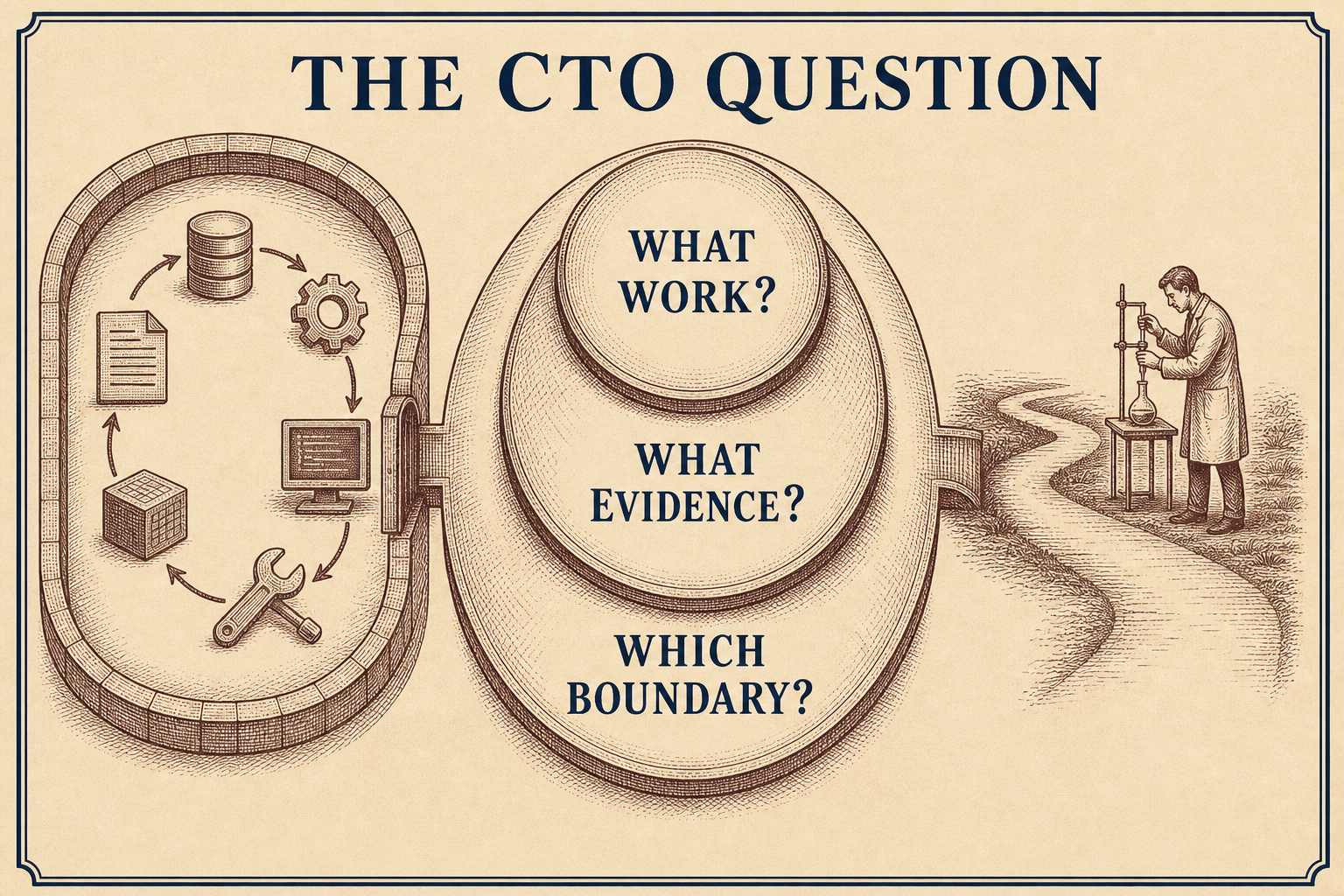
The better question is: What kind of work is this dollar buying, what evidence justifies the next dollar, and which control belongs at the system boundary rather than the human boundary?
AI cost governance should make autonomy earned, scoped, and reversible. It should stop runaway loops, expose waste, and force outcomes into view. It should also leave room for the people doing the difficult work of discovering what the organization can build.
A wallet can price consumption. It should not price permission. Cap runaway loops, make overage routine, and judge spend by what the work learns or delivers.