
The AI Hiring Reversal: Why Headcount Reduction Was Always the Wrong Goal

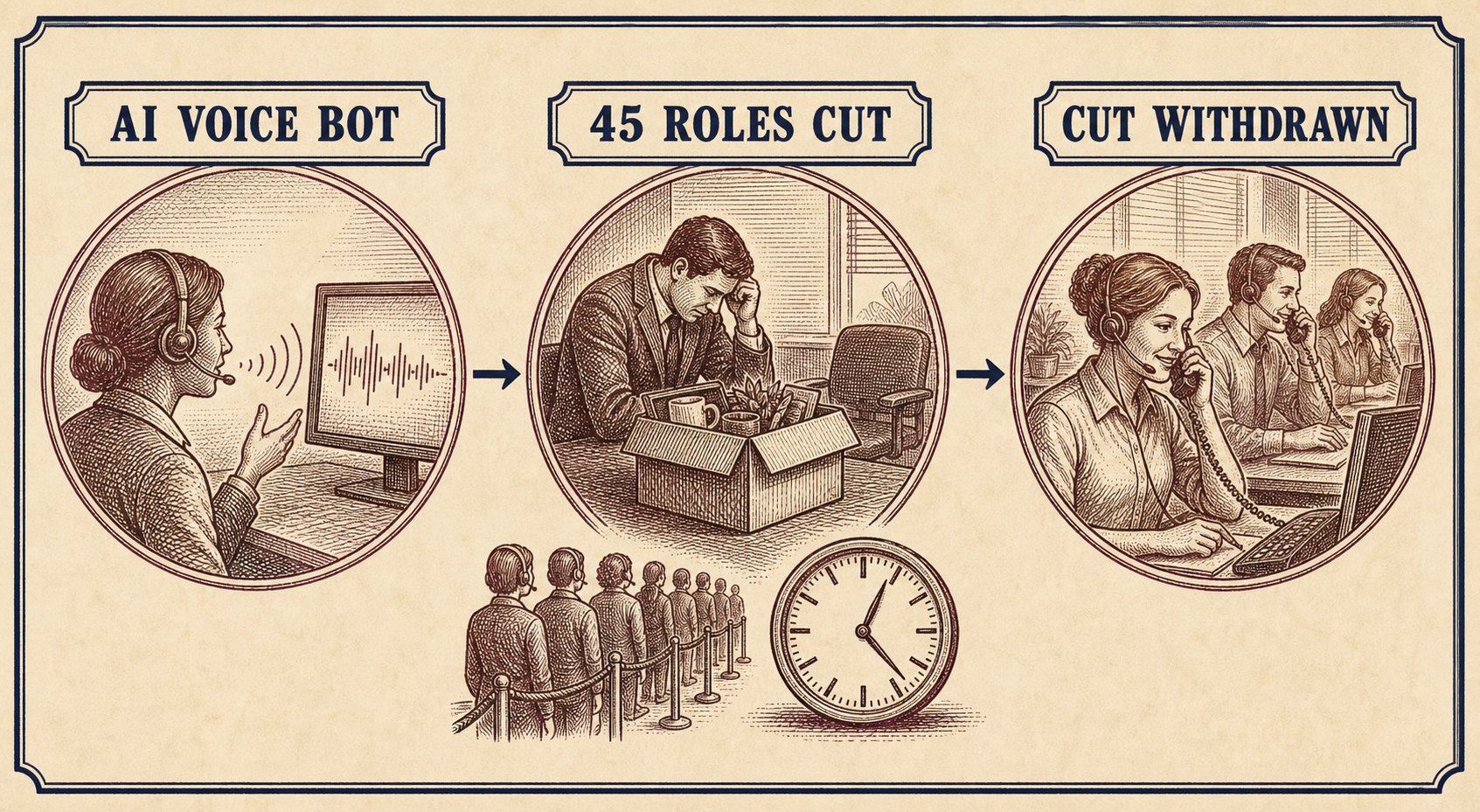
Commonwealth Bank of Australia announced plans to eliminate 45 customer-service roles in 2025 after introducing an AI voice bot.
Then the operating picture got messy. Workers and the Finance Sector Union said call volumes were rising, management was offering overtime, and team leaders were returning to the phones. CBA later called the cuts an error, apologized, and offered affected employees a choice to remain, seek redeployment, or leave.
That is a direct reversal. CBA tied the proposed cuts to AI, reconsidered the roles, and withdrew the plan.
The case does not show that the voice bot handled nothing. My reading is narrower: CBA's headcount decision ran ahead of its understanding of the work. The union's account described pressure in call queues, overtime, and managers' shifts. CBA's admission confirms that it had not assessed the roles or relevant business factors thoroughly enough.
CBA put a company name and a number on the replacement-first mistake. Reversing the cut did not establish that service demand or the work surrounding customer calls had disappeared.
Ford treated automation as a quality-repair problem
Over the preceding three years, Ford hired 350 veteran engineers to help address quality problems after increased reliance on automated quality systems fell short. Bloomberg reported that many had worked at Ford before, while others came from suppliers.
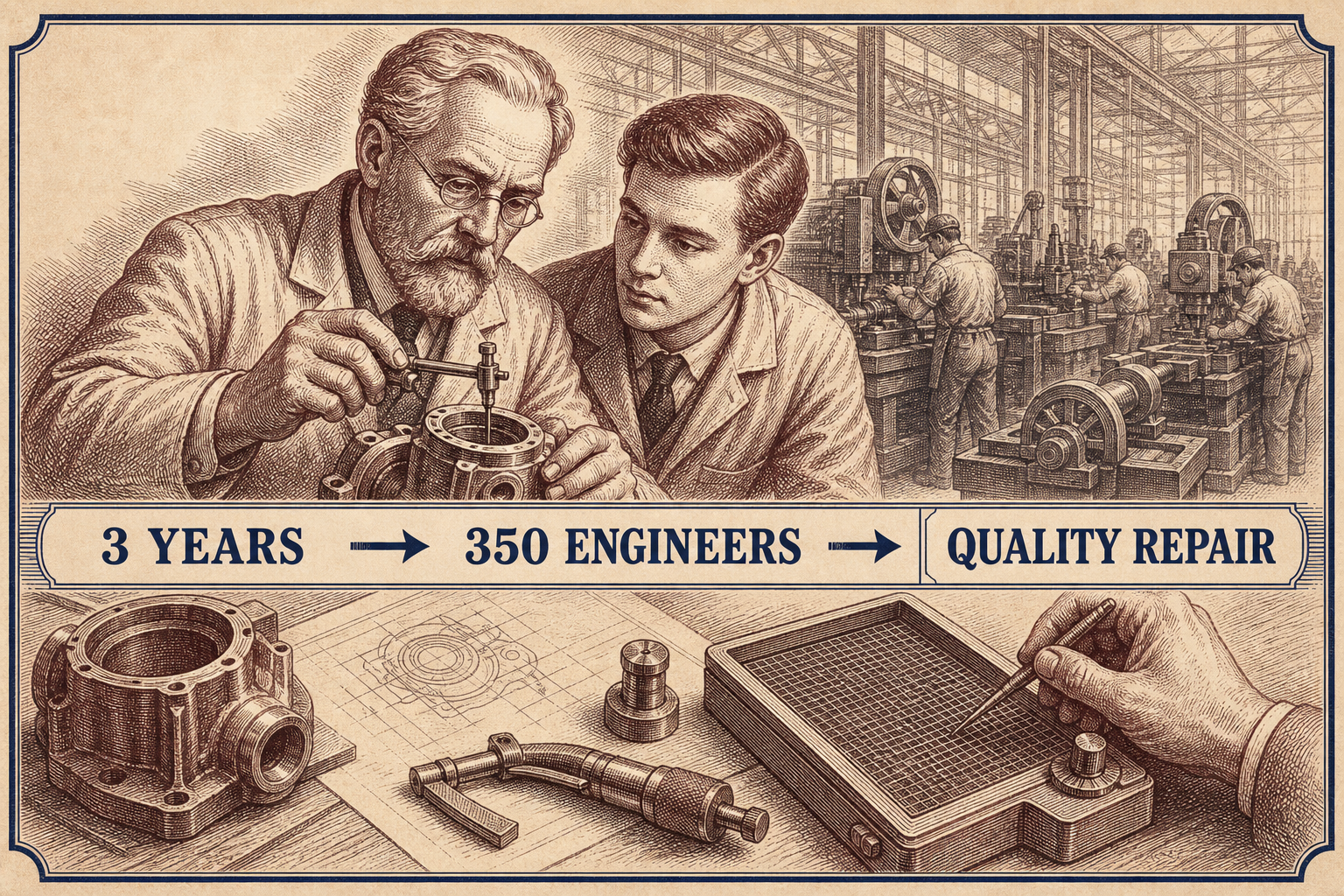
Their assignments were concrete: finding failure points before parts reached the plant floor, training younger employees, and helping reprogram AI tools.
Ford is not a layoff reversal. It is a quality repair. My reading is that the company invested in people who could find misses, teach others what to look for, and improve the tools around them.
That pattern fits the compression ceiling. Ford's experience suggests that automated quality systems did not resolve every quality problem, and that the company still needed experienced people to improve the system.
A survey found correction hires beyond two companies
CBA and Ford are individual cases. In research reported in Robert Half's May 2026 Labor Market Update, more than three in ten surveyed U.S. hiring managers who had eliminated positions after their organizations implemented AI said they later added back the same or similar roles.
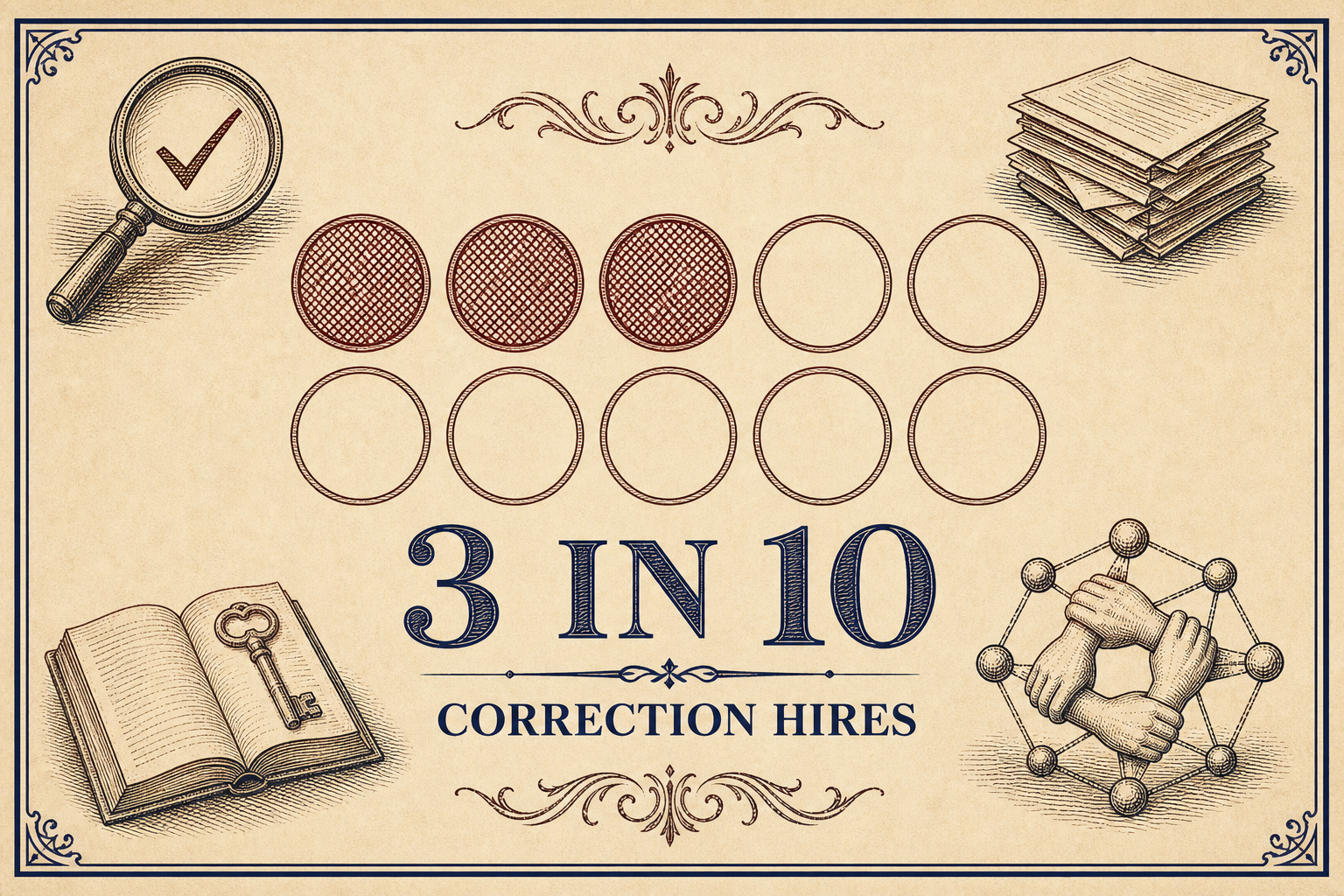
That is survey evidence, not an economy-wide employment rate. It does not count every job eliminated or restored. It does show that correction hires appeared among the qualifying managers Robert Half surveyed.
Robert Half also reported the factors those employers said they had missed: institutional knowledge and context, relationship management, business demand, oversight and quality control, inconsistent adoption, smaller productivity gains, risk and compliance, and burnout or workload strain.
Those answers point to operational questions that a payroll figure cannot answer alone. A role may return because demand was higher than expected, adoption was uneven, quality needed more oversight, compliance risk remained, or the workload pushed the remaining staff too hard. The survey does not establish a broad weakening of relationships. It reports that respondents restored roles involving relationship management that AI could not replicate.
This is why headcount alone cannot settle the choice between replacing a workforce and helping it do more. The case for workforce partnership becomes concrete when a role's removal shifts costs into overtime, contractors, quality control, or burnout.
IBM is protecting the entry-level pipeline
IBM says it plans to triple U.S. entry-level hiring in 2026 while directing those roles toward analysis, problem-solving, and responsible AI use.
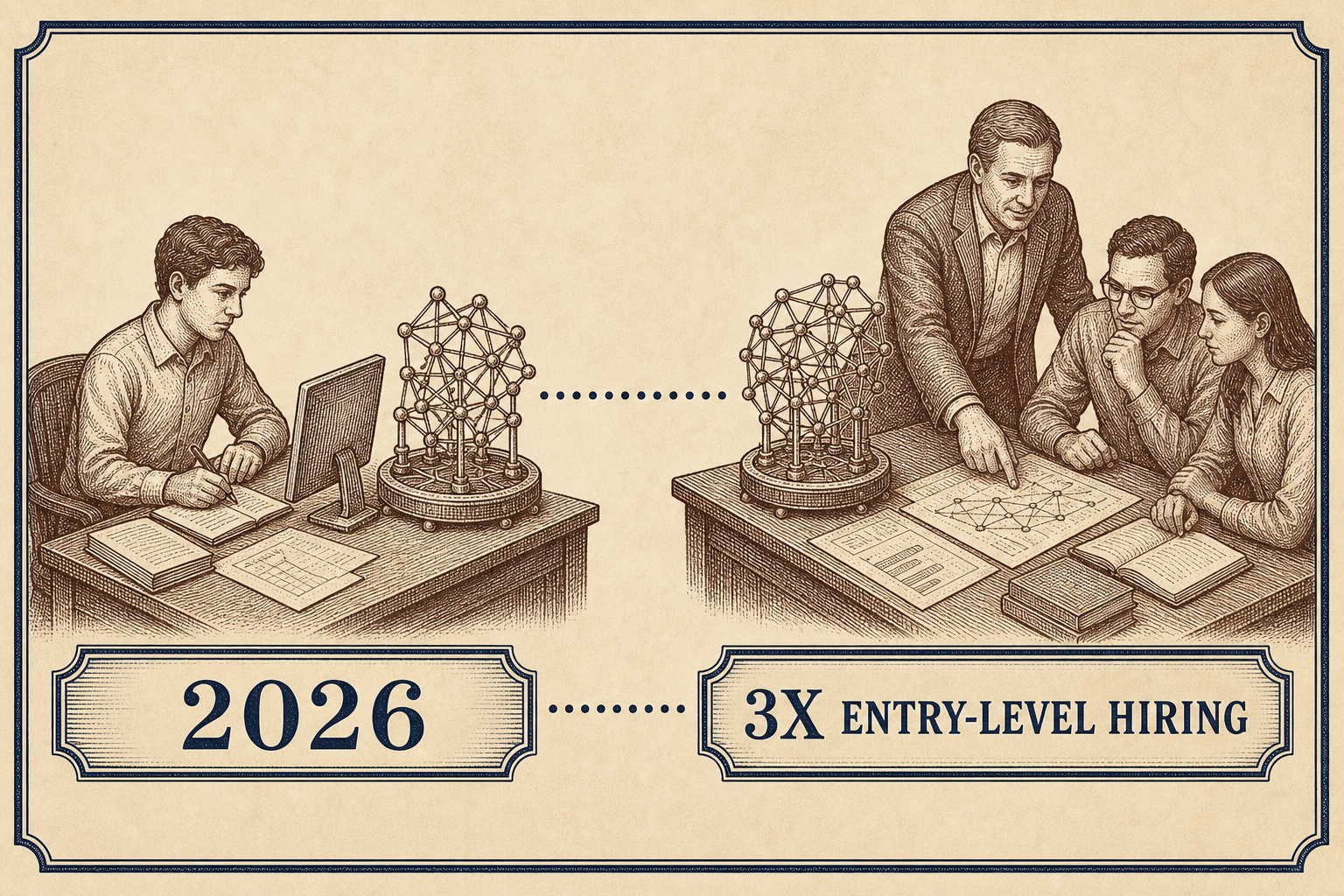
IBM has not described that plan as a layoff reversal. Its stated concern is the future talent pipeline. My reading is that entry-level work must still give people the experience from which more senior judgment develops, even as AI changes their first assignments.
IBM adds a time horizon that the other cases lack. CBA dealt with immediate service pressure. Ford invested in current quality. Robert Half's survey captured roles added back after cuts. IBM is planning for a future pipeline.
AI is a tool, not a workforce
We are in a new world with AI in it. The question is no longer whether leaders can use it to cut a few jobs. It is whether they will use it to make their people more capable or to chase a false sense of savings.
AI is not a replacement for people. It is a tool people need to do more, better work. A tool without people who understand customers, catch failures, manage exceptions, and improve the system is nothing.
That is why headcount reduction is the wrong goal. It gives leaders a number before it gives them an answer. Before treating an AI deployment as a saving, measure service levels, quality, overtime, escalations, contractor load, and the entry-level training pipeline. Then ask whether the system made people more capable, or merely made their work less visible.