
Becoming a Full Stack Builder

If you work in product, design, engineering, quality assurance (QA), or operations, you may have started hearing that the boundaries around your job are changing. People are talking about role convergence. A new title keeps coming up: the builder.
It's reasonable to wonder what that means for you. Is this a useful way to work, another fashionable title, or a warning that your employer expects one person to take on several jobs? When your livelihood and years of experience are involved, those questions deserve more than a breathless prediction about artificial intelligence (AI).
Let's take some time to look at what companies mean by a full stack builder today, what they're actually hiring for, and how the skills you already have might carry into that work. This is a fast-moving target. Different versions are already emerging, and the role will keep changing as tools and organizations change around it.
What is a full stack builder?
A full stack builder takes a bounded product problem from understanding the user through designing, implementing, releasing, and improving a working solution. The person crosses several professional boundaries, using AI and specialist help to cover more of the journey.
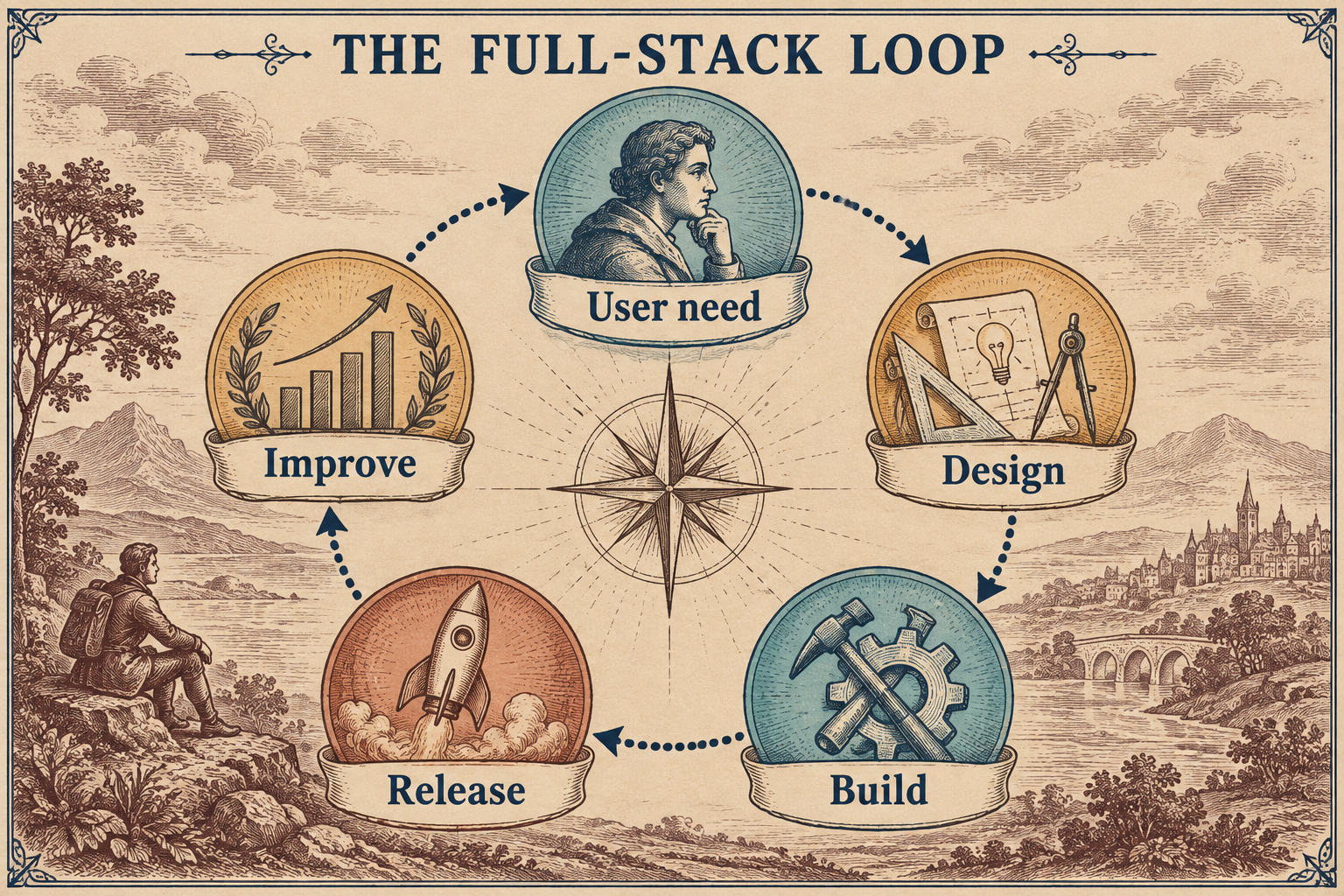
The term reaches beyond the usual meaning of full stack developer, which generally spans frontend and backend engineering. Here, the stack includes deciding what deserves to exist and finding out whether it actually helped.
Companies are already trying this
In his August 26, 2026 account of LinkedIn's Full Stack Builder program, former chief product officer Tomer Cohen describes reorganizing work around people able to carry an idea through to market. The first-person account also describes LinkedIn's two-year Associate Product Builder Program: candidates submitted something they had built, and the final interview required a live end-to-end build. Cohen emphasizes taking initiative with AI and questioning its output. That's one leader's account of an operating model, rather than a controlled demonstration of its results.
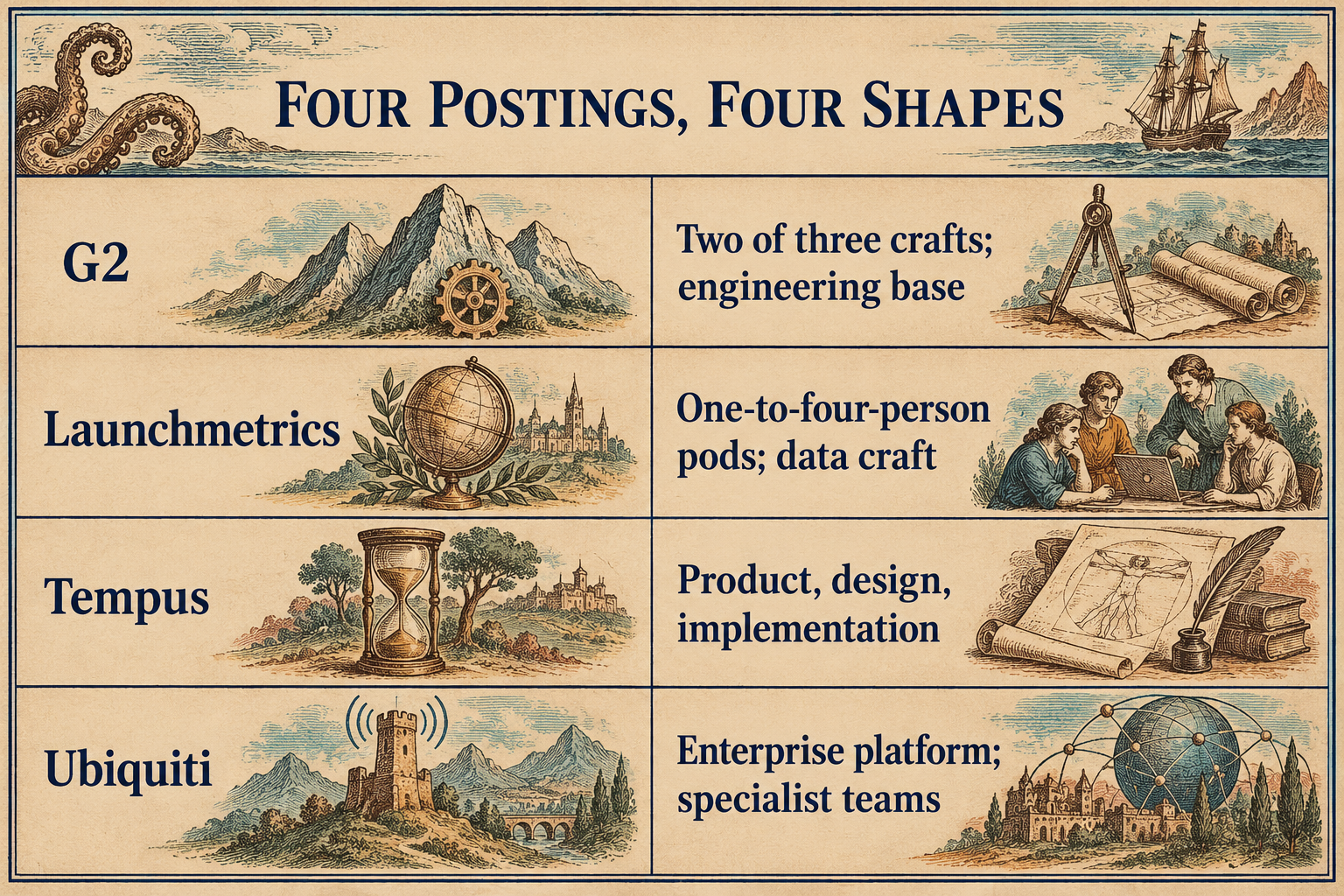
The job descriptions are getting concrete:
- G2's Senior AI Product Builder combines customer discovery, product decisions, design, and hands-on building. It asks for demonstrated strength in at least two of product management, engineering, and design, alongside a strong engineering foundation.
- Launchmetrics' Senior Data Product Builder operates in mission-based pods of one to four people. People retain a primary craft and product domain while taking broader responsibility. This particular role emphasizes data expertise, structured query language (SQL), pipelines, and adoption.
- Tempus' GenAI (generative artificial intelligence) Product Builder blends product management, design, and implementation in customer and internal workflows. Its requirements include production concerns such as evaluation, error handling, and observability.
- Ubiquiti's Software Product Builder leans toward enterprise platform engineering, including identity, application programming interfaces (APIs), cloud infrastructure, and operator workflows. The posting explicitly includes collaboration with specialist teams, including development operations (DevOps).
There is no settled universal job here. The common pattern is broader ownership anchored in real expertise; the balance changes with the product and its risks.
Hiring advertisements tell us what employers want. They don't establish how widespread successful transitions are, what happens to total employment, or whether a particular team has designed sustainable jobs. Tasks can disappear, hiring can contract, and existing roles can change without these five professions vanishing wholesale. Their longer-term future remains uncertain.
Groktopus has already explored how AI recombines jobs and why organizational boundaries have to move with them. This is the worker's next question: what can you learn and demonstrate while that reorganization is happening?
We have crossed professional boundaries before
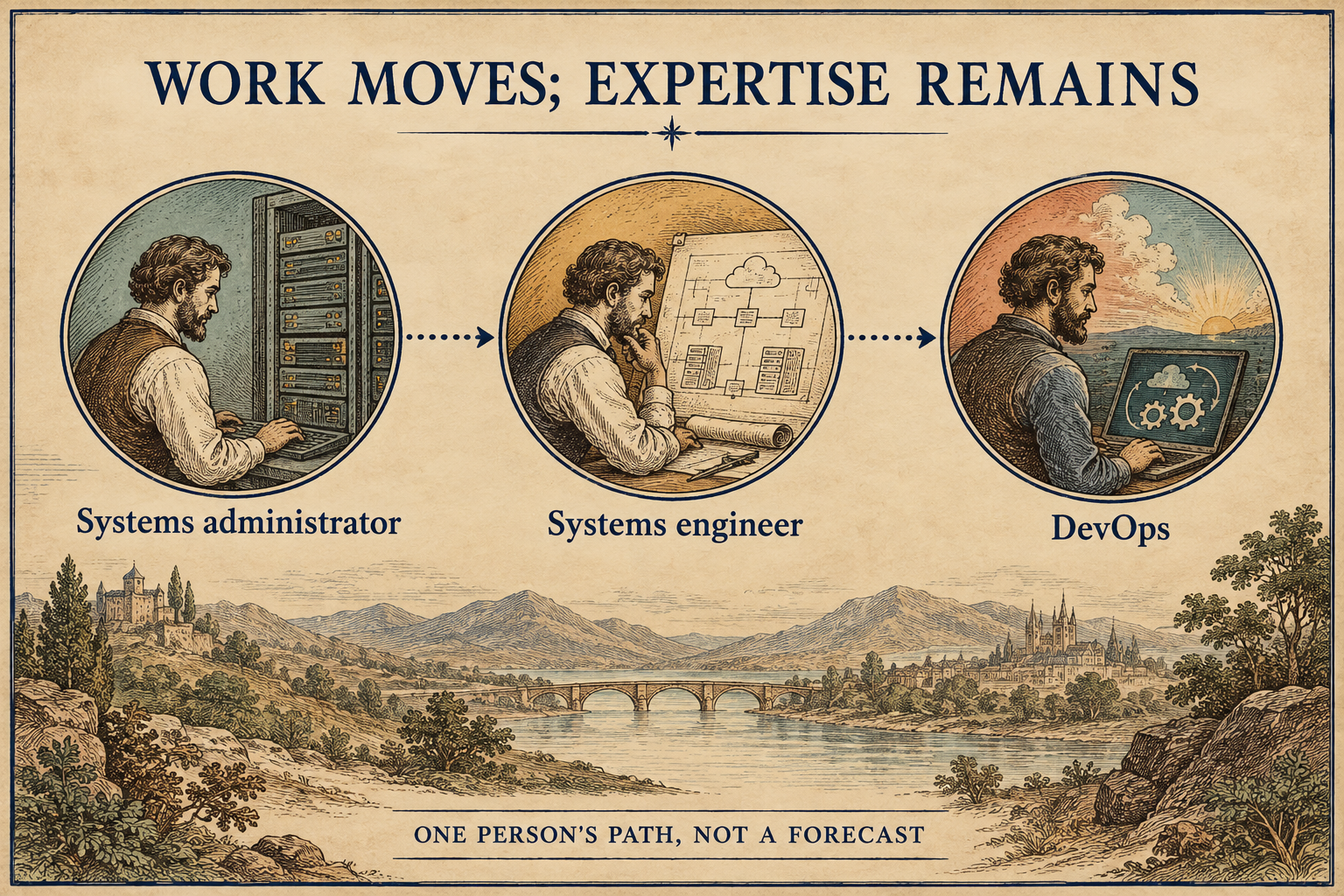
My own progression went from systems administrator to systems engineer to DevOps. I've lived through several of these transformations. They can be scary without being the end of the world.
Look back ten, fifteen, or twenty years and ask which tasks stayed with your role, which moved elsewhere, and which became easier to automate. Google's Release Engineering chapter in the 2016 book Site Reliability Engineering describes specialists building tools that let product teams control and run their own release processes. The Platforms White Paper from the Cloud Native Computing Foundation (CNCF) develops the idea of self-service infrastructure as an internal product; its first version was completed in March 2023. Expertise supported broader ownership as work moved across boundaries.
Systems administrator and systems engineer remain real titles. The Bureau of Labor Statistics' occupational outlook for network and computer systems administrators says some tasks are increasingly handled by developers focused on DevOps, some are outsourced to Networks-as-a-Service companies, and administrators are increasingly automating routine tasks. It also says network and computer systems administrators will continue to be needed. My career is one path through those changes. It gives me a reason to take adaptation seriously, without treating history as a guarantee about AI's employment effects.
Start with one complete piece of work
Pick a small problem whose consequences you can contain. A read-only internal tool, a public-data explorer, or a low-risk scheduling aid can teach the whole delivery loop. A system that makes clinical decisions or moves customer money is a poor practice field.
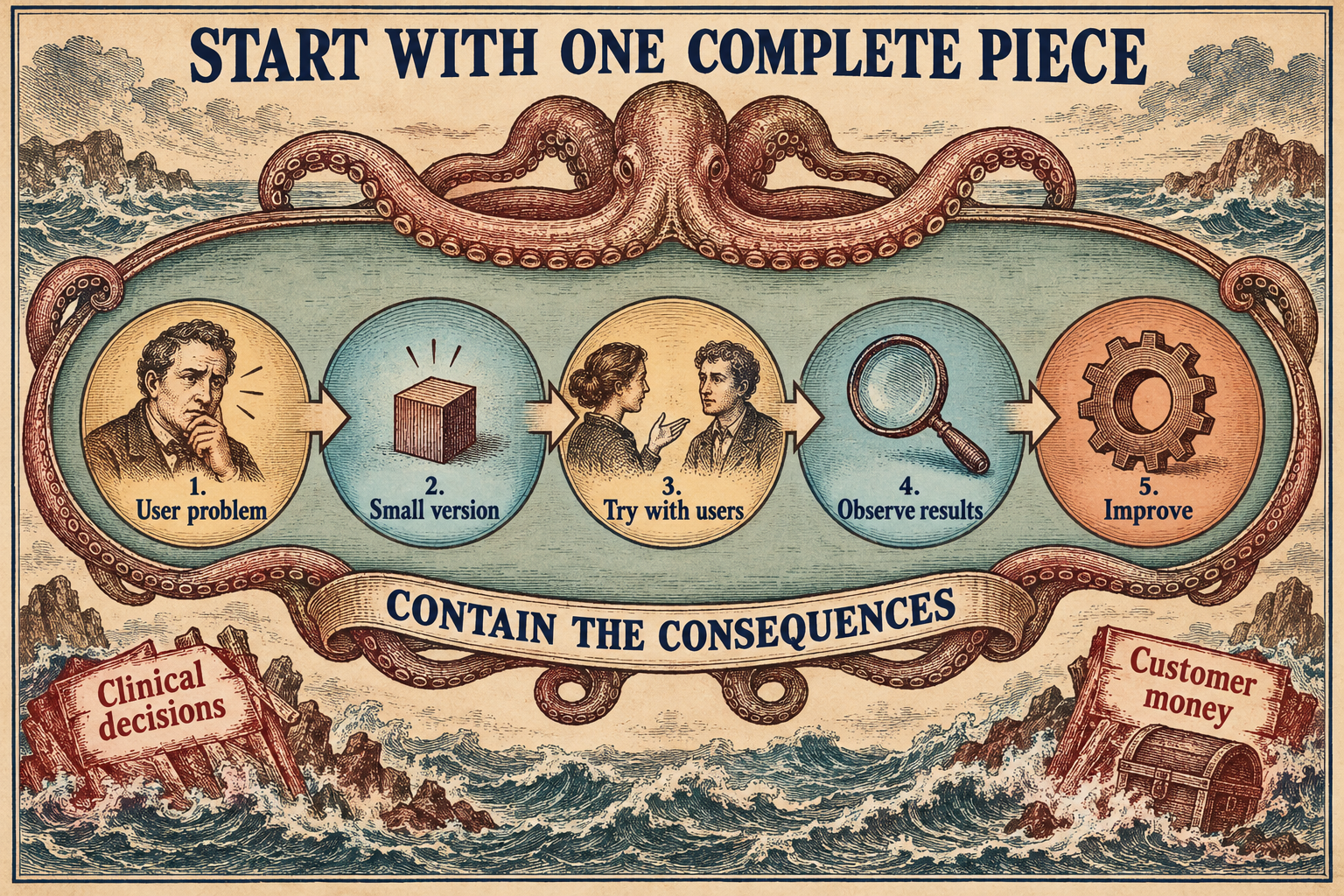
Begin with a user you can talk to. Write down the task they struggle with, how they handle it today, and what improvement you expect. Then build the smallest usable version, put it in front of them, and observe what happens. Keep enough records to distinguish an improvement from a persuasive demo.
Use AI to explain code, propose implementations, and generate tests. Learn to inspect changes, reproduce failures, and undo deployments. Get help when you can't explain a component's purpose or permissions.
The following paths are practical recommendations. In particular, the QA and DevOps routes are inferences from adjacent skills and product needs, rather than evidence that employers are already moving those professions into builder roles at a known rate.
Product managers can carry discovery into implementation
Your existing advantage is deciding which problem deserves attention. Interviewing users, navigating competing demands, setting boundaries, and recognizing weak evidence all remain valuable when implementation gets faster. Faster implementation can make poor prioritization more expensive by allowing more of it.
Start learning the mechanics underneath the product. Use version control, run an application locally, and follow one request from the interface through an API to stored data. Learn enough SQL to inspect what happened and enough application code to make a small change you can explain. Then add tests, logging, and a deployment to a safe environment.
Atlassian's AI Builders Week brings product managers and designers into hands-on work with code, prototypes, and evaluations, supported by engineering leaders and design technologists. It's a useful example of supported learning, with no guarantee that a week produces an independent production engineer.
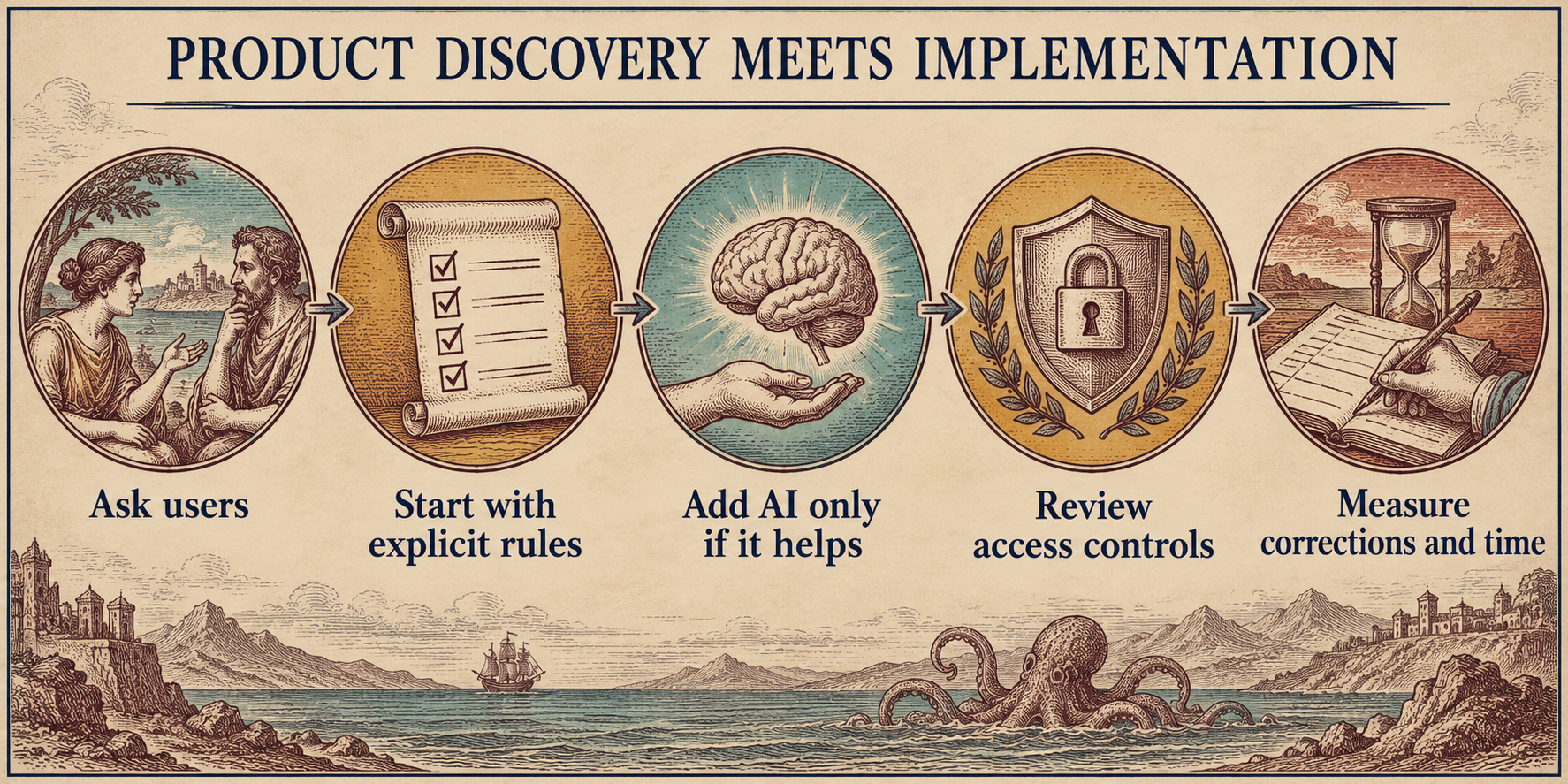
For a transition project, build a tool that helps an internal team sort incoming requests. Interview the people doing the sorting. Start with explicit rules and a review queue; add AI classification only if it improves the task. Measure corrections and time spent, including review. Have an engineer review access controls before a pilot uses real organizational data.
Keep the evidence from discovery through the second iteration. You should be able to explain a feature you removed after watching someone use it, as well as the code you added.
Designers can carry interaction decisions into working software
A designer brings practiced attention to the person struggling with the interface. Research, information architecture, accessibility, and interaction design matter across a much larger surface than the happy-path screenshot.
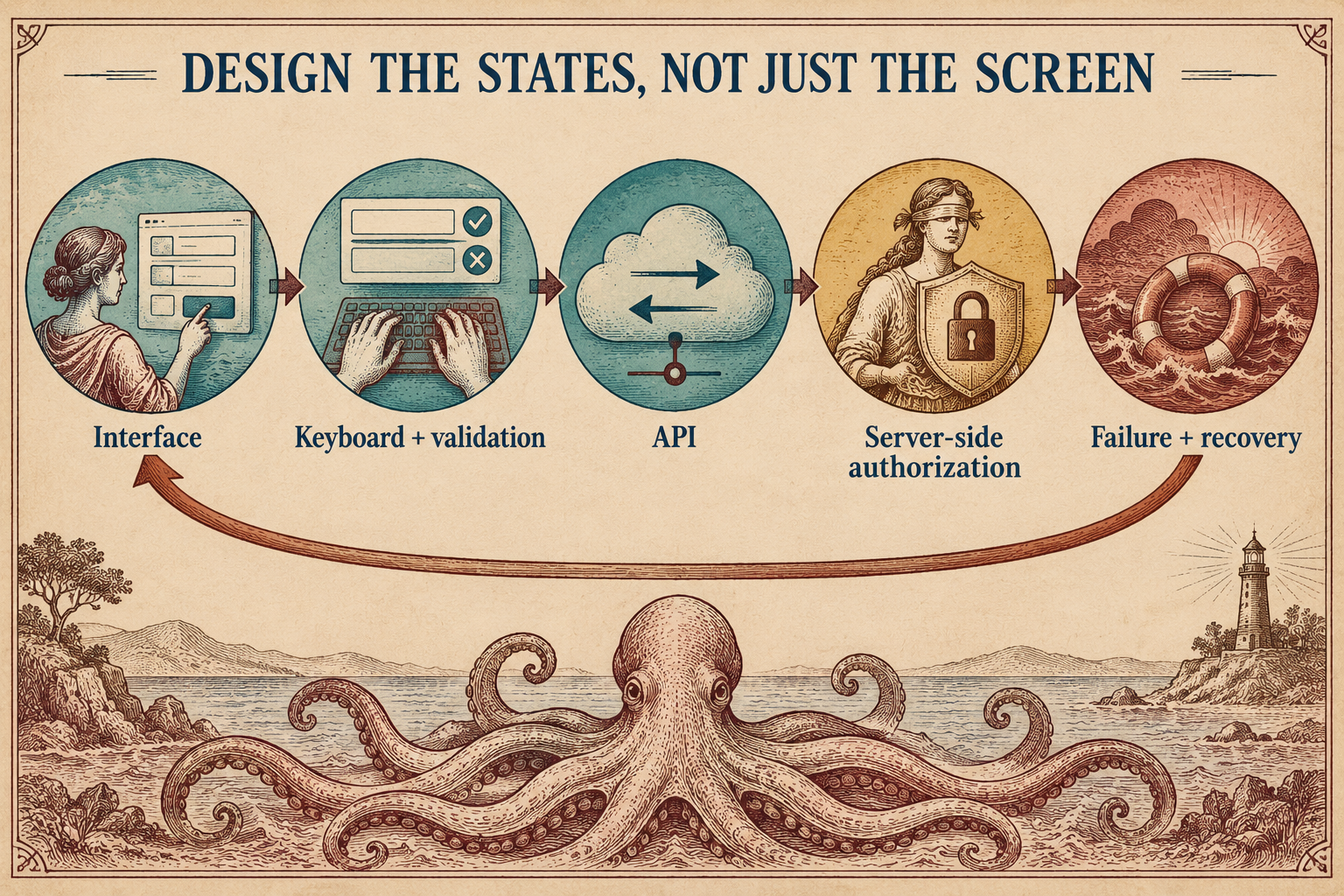
Build outward from that strength. Learn semantic HyperText Markup Language (HTML) and Cascading Style Sheets (CSS), then the component model and state management used by one application. Work through forms, validation, keyboard navigation, loading states, and error recovery. Next, connect the interface to a small API and learn where validation and authorization must happen on the server.
An AI coding assistant can help produce a working interface quickly. Inspect what it generates. A control that looks like a button may behave badly with a keyboard. A convincing success screen may conceal a failed write. Those are product problems you can now trace into implementation.
For a transition project, take one troublesome intake or booking flow and make a working version with test data. Include editing, cancellation, empty results, and a failed request. Ask people to complete real tasks with it and observe where they hesitate. Check accessibility with both tools and hands-on interaction, then get a code review before a limited release.
Your portfolio can show the original friction, the implemented interaction, and what changed after testing. Add a short account of how you handled failure. It tells a reviewer much more than another polished screen.
Software engineers can take ownership earlier
You already know how software acquires consequences. Debugging, data modeling, integration, maintenance, and understanding production behavior provide a strong foundation for broader ownership.
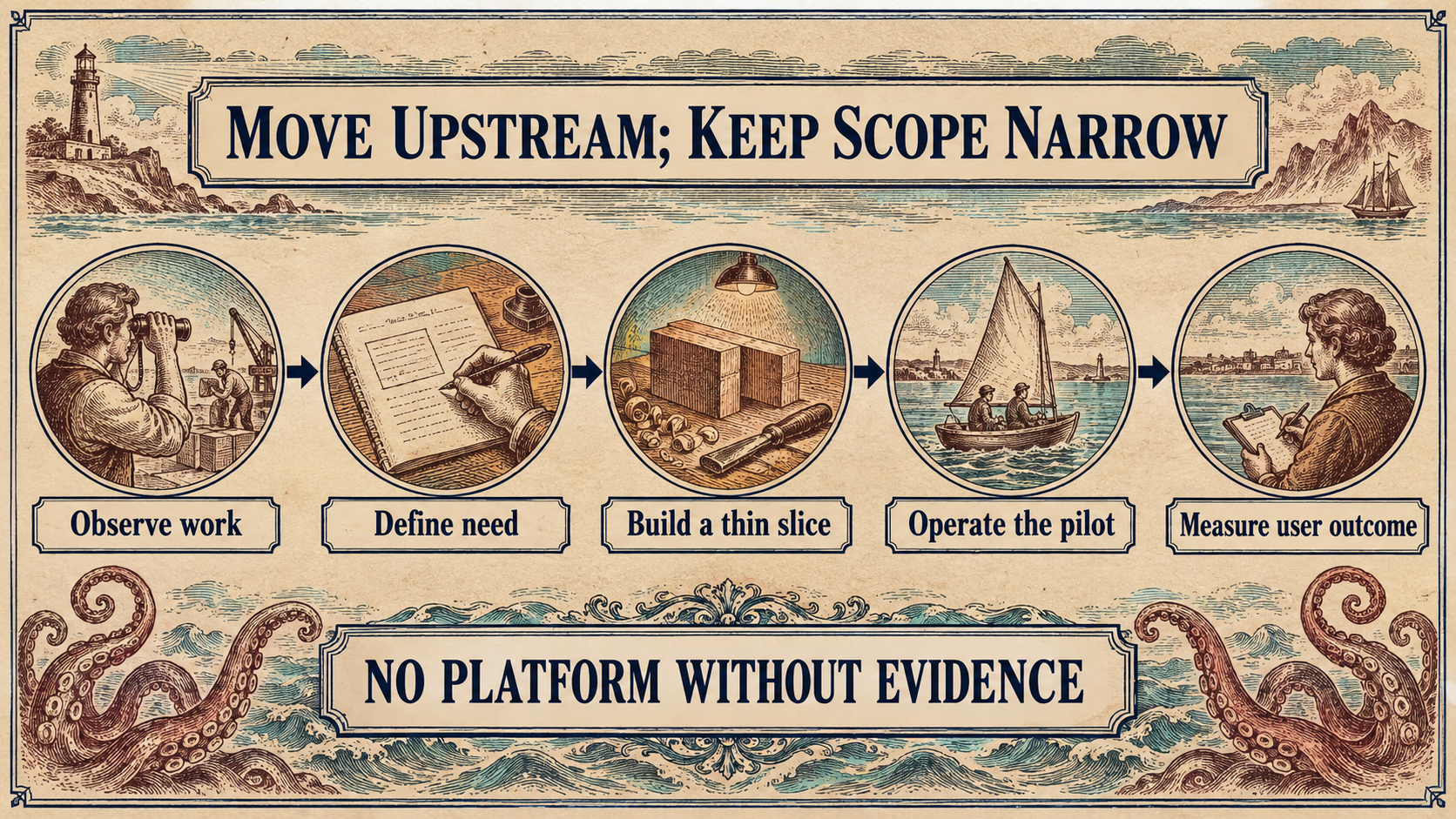
The next gap may sit upstream. Practice interviewing users without immediately proposing a solution. Learn to separate the requested feature from the job someone needs to do. Spend time on usability and accessibility, and learn to define a useful outcome before choosing the architecture.
A small interface change that removes a daily annoyance may serve users better than a technically impressive subsystem. You need enough contact with the work to tell the difference.
For a transition project, choose an internal workflow you currently encounter only through tickets. Watch someone do it. Write a short problem statement, sketch an interaction, and build a thin working slice. Use AI where it helps, while keeping changes small enough to review. Instrument the user outcome and operate the pilot yourself.
Avoid expanding the project into a platform before you have evidence that anyone needs one. Record why you chose the scope, what users rejected, and what happened after release. The engineering remains visible, but now a reviewer can also see how you decided what to engineer.
QA engineers can turn failure knowledge into product design
QA work develops an unusually useful habit: asking what happens when reality refuses to follow the script. Exploratory testing, risk analysis, reproducible bug reports, and understanding business rules all transfer into building.
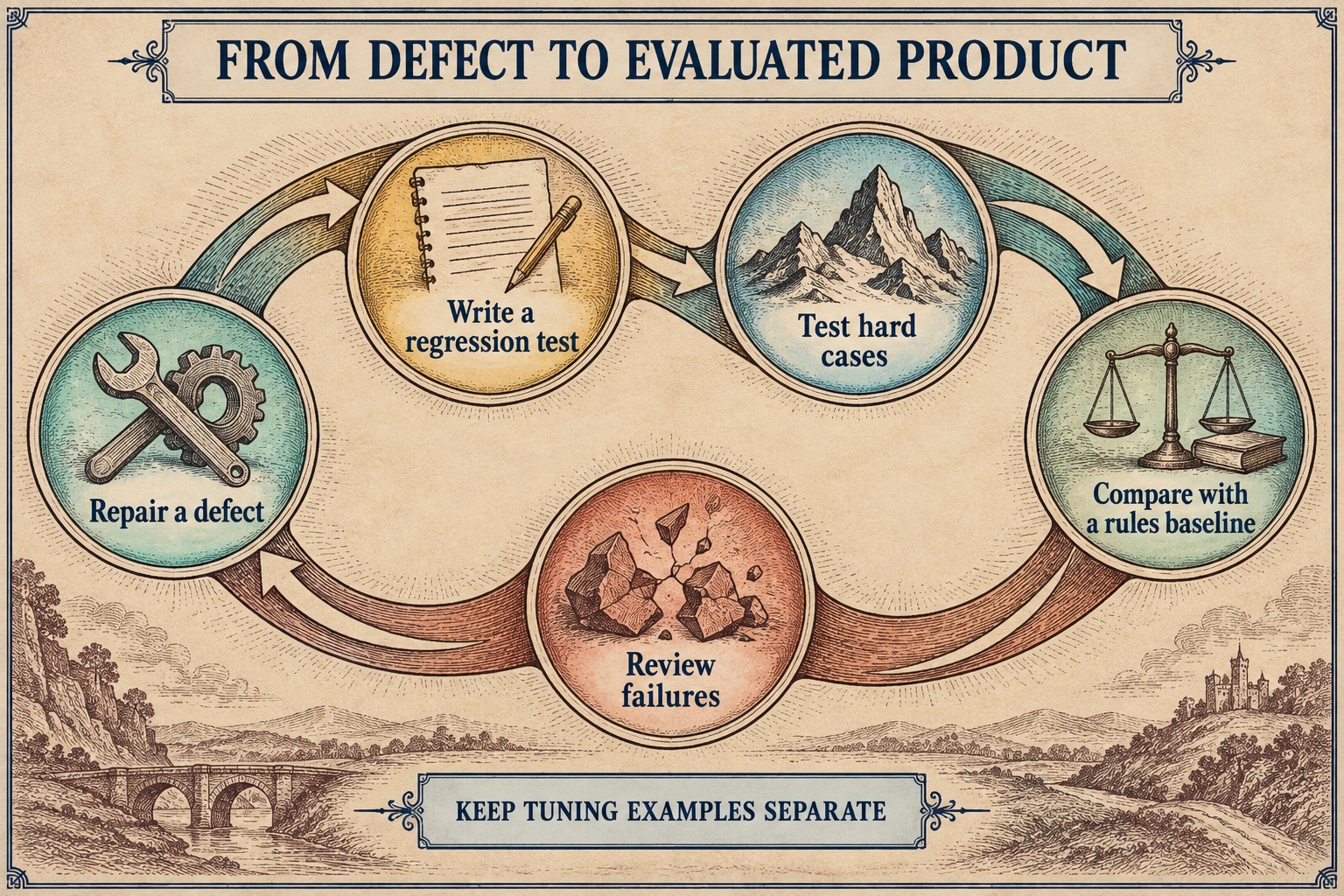
Start by moving from reporting one small defect to repairing it. Trace the behavior into code, write a regression test, make the change, and get it reviewed. Then build a small feature with an interface and persistence. That sequence adds implementation skills while keeping you close to problems you can evaluate well.
For AI-enabled features, extend familiar testing practice into evaluations. Assemble representative examples, define acceptable behavior, and inspect false positives and false negatives separately. Include difficult and ambiguous cases. Repeated runs can reveal inconsistency that one successful demonstration hides. Keep evaluation examples separate from examples used to tune the system.
For a transition project, build a review tool for a low-risk text-classification workflow. Let people correct suggested labels, inspect the underlying text, and flag uncertain cases. Compare the AI version with a simple rules-based baseline. Report where it fails and what those failures cost the reviewer.
Your evidence should include a usable product, the evaluation set, a repaired failure, and your release criteria. Quality engineering also remains a valuable specialization. Broader building should give your judgment more influence over what gets made, while preserving independent review where the consequences require it.
DevOps engineers can build products for the people operating them
People working in DevOps, platform engineering, and reliability already understand parts of the delivery loop that a prototype can hide. Automation, deployment, observability, incident response, access management, and cost all become relevant when somebody starts relying on the product.
The useful expansion is often toward discovery and interaction design. Treat developers and operators as users whose time and attention matter. Watch how they use your tooling. Learn enough frontend development to give them a clear workflow, and enough product measurement to see whether they can finish the task without asking you for help.
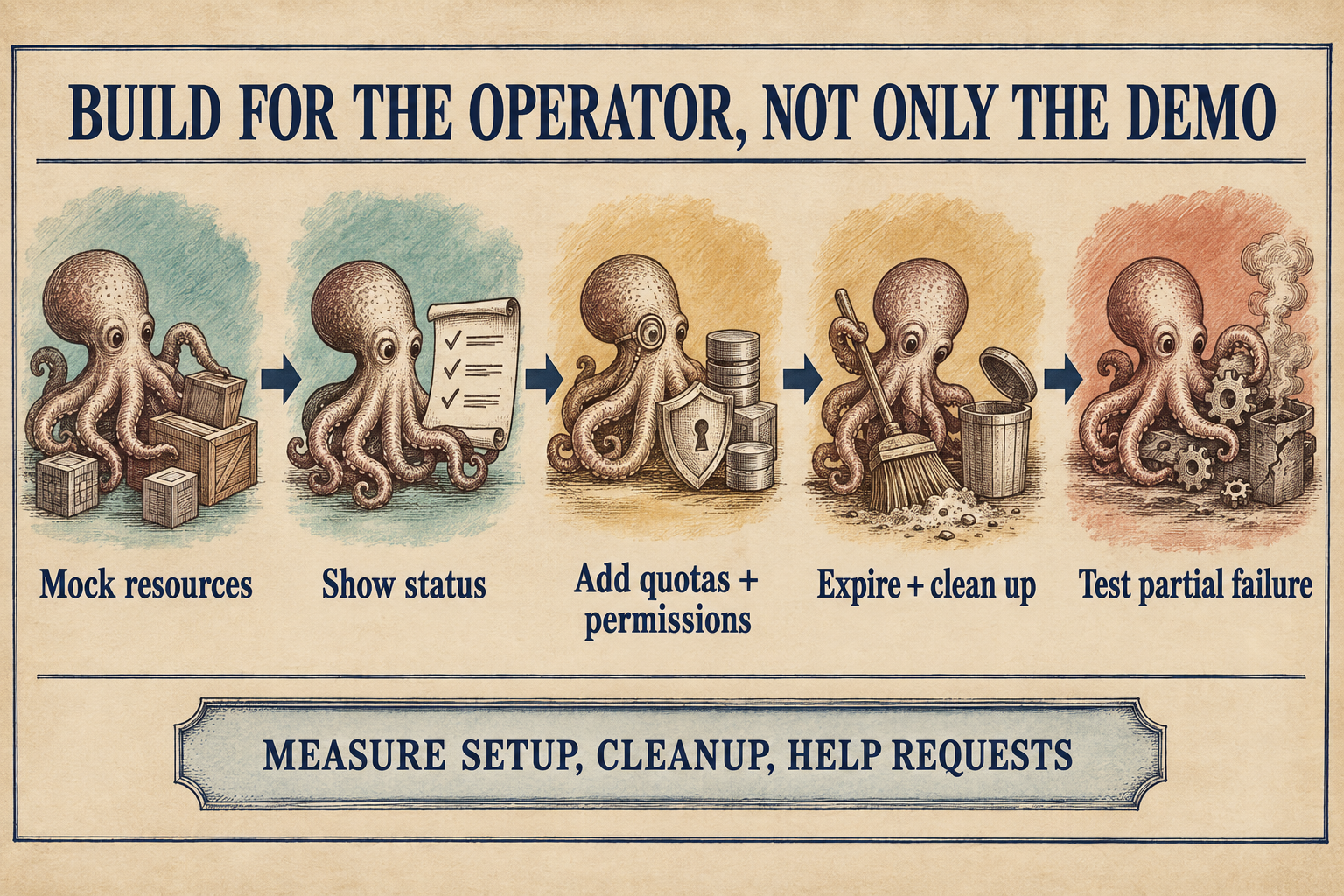
For a transition project, build a self-service preview-environment tool in a sandbox. Give it a small interface, clear status, expiration, and automatic cleanup. Start with mock infrastructure or tightly bounded resources. Add quotas and permissions before inviting a pilot team.
Measure successful setup, time to a usable environment, cleanup reliability, and the requests for help it generates. Test what happens when provisioning partly fails and show how an operator recovers.
The product evidence is the complete experience, including recovery and cost. You can retain deep infrastructure expertise while becoming more effective at deciding what to automate and making it usable. Platform and reliability specialists still have work that deserves sustained depth and independent attention.
Build evidence in a sensible order
Use a learning sequence with observable exits:
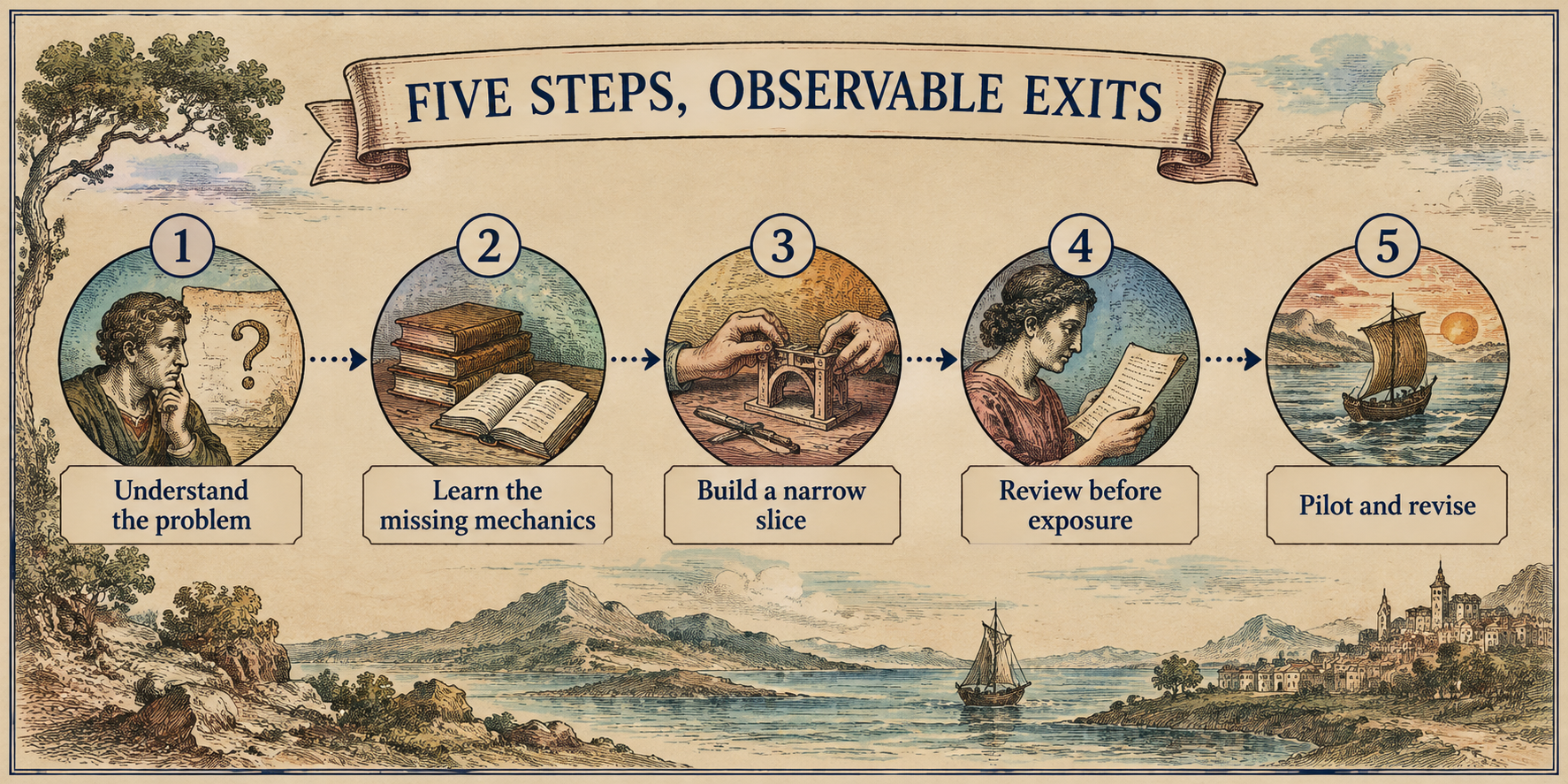
- Understand the problem. Talk with users, observe the current workflow, and identify a measurable improvement.
- Learn the missing mechanics. Get one small application running. Make and explain a change, test it, and restore an earlier version.
- Build a narrow usable slice. Include realistic failure states and the minimum data needed to learn.
- Review before exposure. Have someone qualified check areas beyond your competence, especially permissions, security, privacy, and consequential domain rules.
- Pilot and revise. Watch a few users, inspect failures, measure the result, and make a second version.
Pace this around your starting skills and available support. A beginner learning application development may need months of guided practice. An experienced engineer crossing into discovery may start with a smaller gap. Neither gains much from pretending the gap is gone.
Keep a compact case study: problem, users, your contribution, key decisions, tests, release approach, observed results, and remaining limitations. Show what AI produced, what you changed, and where a colleague's expertise was necessary. Respect employer confidentiality; use synthetic data and only share work you have permission to disclose.
Choose your timing while you have options
You don't have to wait for an employer to rename your job before trying adjacent work. Watch for changes you can verify: fewer handoffs, expectations that prototypes run, responsibility for adoption, or repeated requests to use AI across your old boundaries. Ask your manager which of those changes are becoming part of your role.
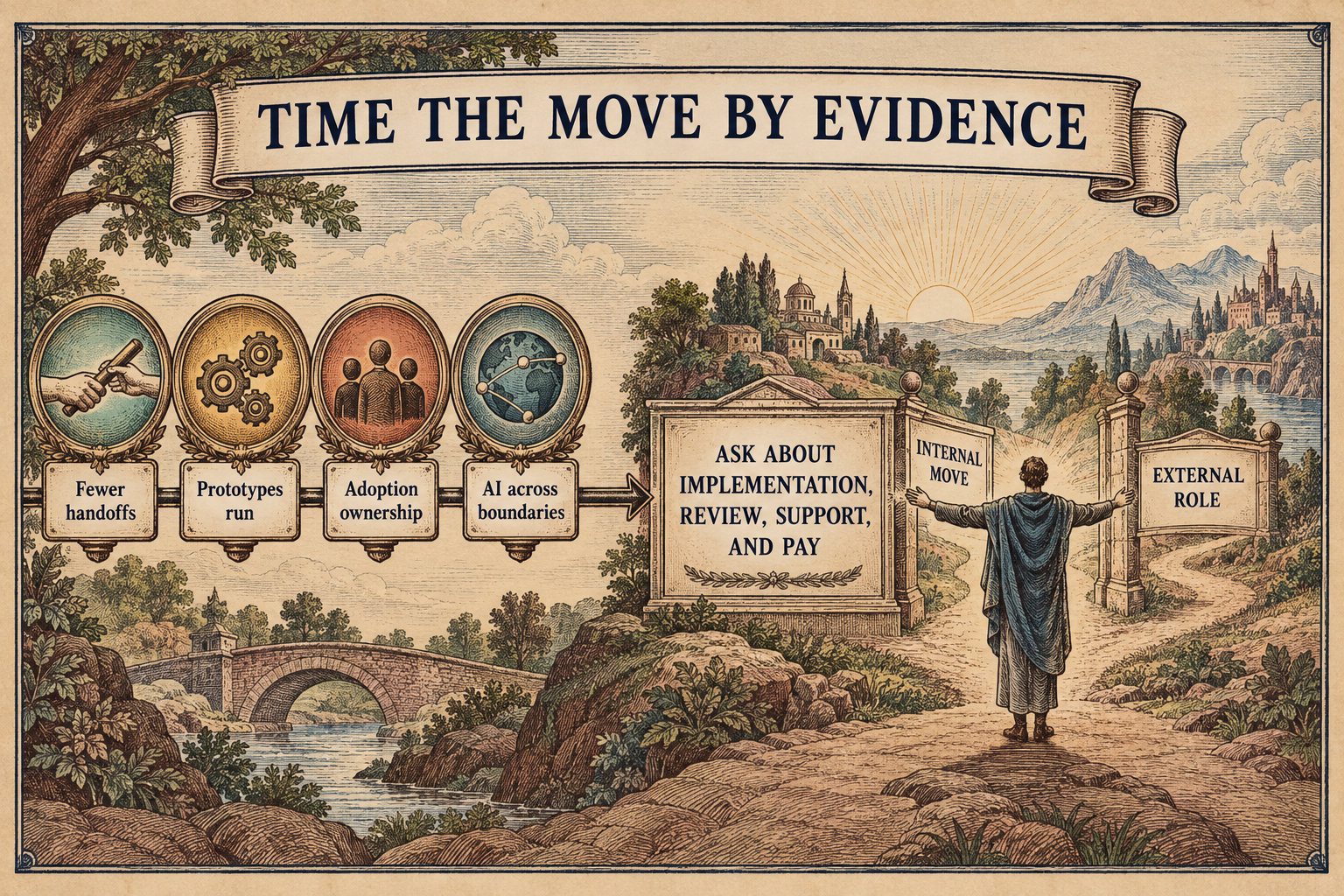
Choose one supported project and build evidence. Then compare an internal move with external openings whose actual scope you understand. Ask how much implementation is expected, who reviews it, what support exists, and whether pay reflects the responsibility. A builder title can cover very different jobs.
Keep your current commitments and financial situation in view. Learning while employed can preserve choices; rushing to resign because of a forecast can narrow them. The aim is to make your next decision with demonstrated capability and better information, before a restructuring makes the choice more hurried.
The organization has a job here too
Before accepting broader responsibility, ask what authority comes with it. Which decisions can you make? Who reviews risky changes? Who supports production? What existing work leaves your queue, and how will performance and compensation reflect the changed scope?
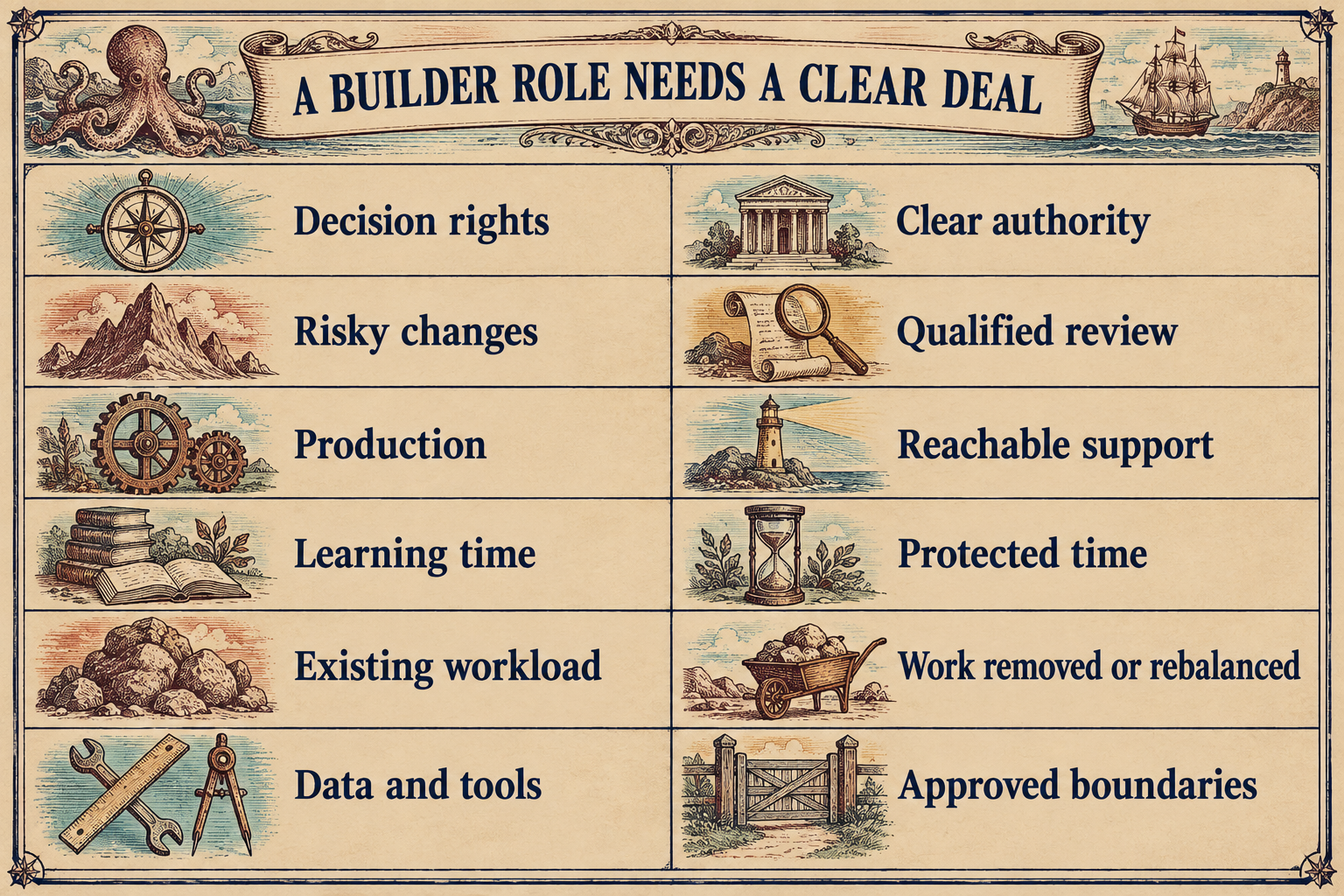
Employers need to provide protected learning time, safe environments, approved tools, and reachable specialists. Customer information and proprietary code should stay within approved data-handling boundaries. Review and recovery need time in the plan. Nobody should have to discover the escalation path during an incident.
A new title won't settle any of this. Take one bounded problem far enough that a real user benefits, with evidence that the result holds up. Then choose the next boundary to cross. Keep the depth you earned, and give it somewhere useful to go.