
McDonald’s Pricing Tool Tests Human Control: Can Franchisees Say No?

Since at least 2019, McDonald’s has used a machine-learning tool to recommend prices for every menu item at each restaurant, Reuters reports. The tool studies millions of daily transactions across nearly 14,000 restaurants and checks nearby competitors’ menu prices. It also estimates how much customers in a local market might pay. Reuters reviewed August screenshots and interviewed nine sources with first-hand knowledge of the pricing strategy. Franchisees, the local owners who run those restaurants, set the actual prices, McDonald’s says.
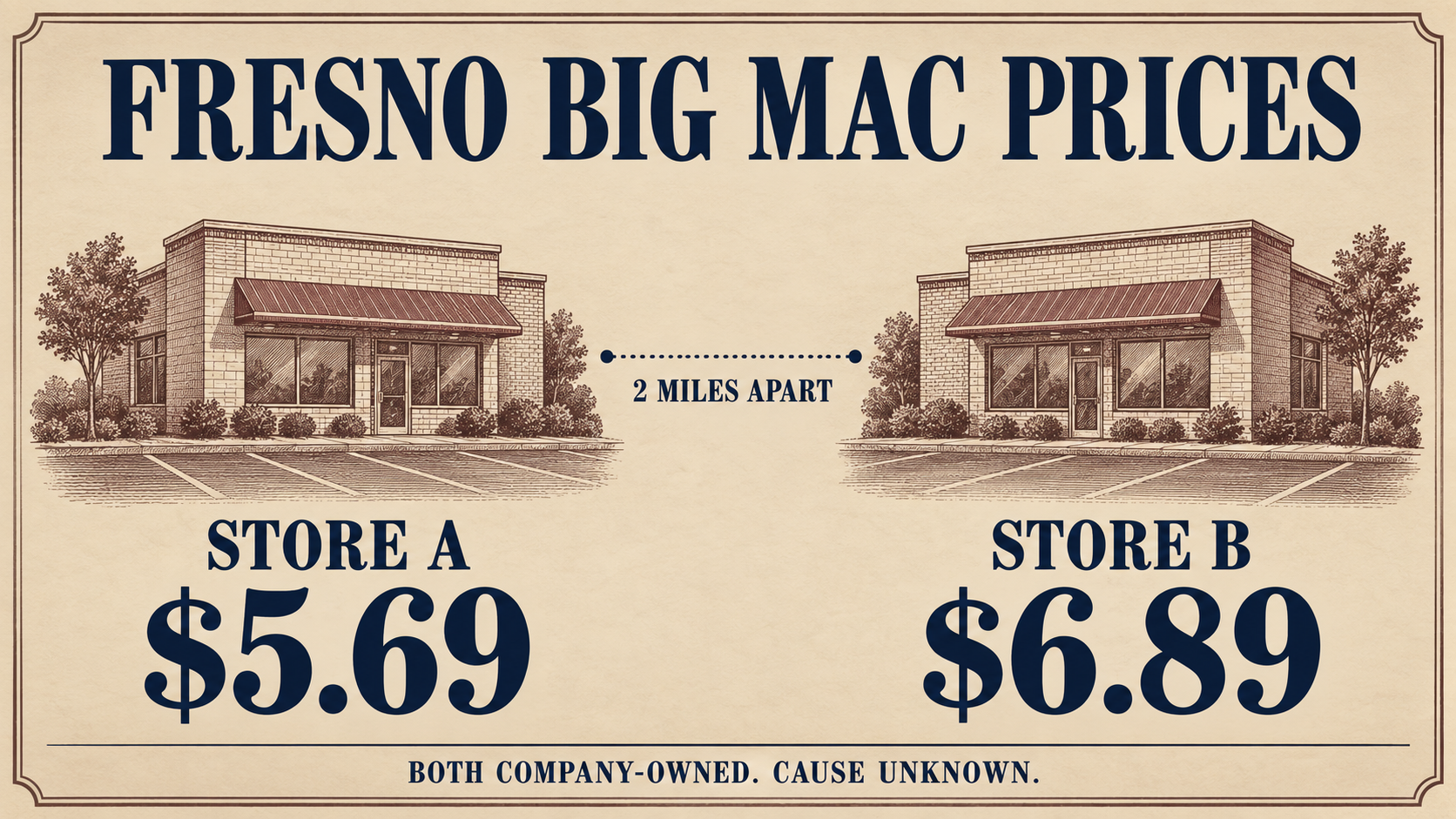
In September, Reuters found two company-owned McDonald’s restaurants in Fresno, about two miles apart. A Big Mac cost $5.69 at one and $6.89 at the other. Reuters couldn’t connect the 21 percent gap to the pricing tool. Because McDonald’s ran both stores, the comparison doesn’t answer whether a franchisee can turn down a recommendation.
Karen King, a former franchisee, described calls from corporate officers after she and other owners strayed from the recommendations. McDonald’s did not address King’s specific claims. It called the broader report “speculative and uninformed” and described the portal as standard business practice.
Inside the pricing portal
A screenshot Reuters reviewed shows what a franchisee sees: “Your restaurant is showing MEDIUM SENSITIVITY to Price,” based in part on “customer willingness to pay in your area.” Nearby competitors’ menu prices appear in the same portal.
McDonald’s sets the tool’s goals. Two former employees of Tiger Analytics, which runs the platform, told Reuters that the company supplied targets such as attracting more customers or boosting profits. They described rules for price increases, including focusing on items that had not gone up in at least two years and keeping ice cream and drinks out of summer increases. Tiger declined to comment.
McDonald’s calls the portal “a tool, not a mandate” and says the tool does not set prices for individual customers or change them by time of day. The company describes the willingness-to-pay estimate as a local-market measure, not an individual customer’s spending.
Three franchisees told Reuters the tool had widened price differences between restaurants, sometimes within the same area. McDonald’s says stores a few miles apart can belong to different markets.
Diane Bezucha, a Brooklyn resident, told Reuters she understands why a company wants feedback about demand. If McDonald’s uses that information to raise prices just because demand is high, she said, “that doesn’t really help me as a customer.”
When an owner sets a different price
Five restaurant owners told Reuters they felt pressured to use the pricing tools. One former franchisee said she didn’t feel compelled. Company documents show McDonald’s sends pricing guidance at least three times a year. A June document tracked franchisees’ departures from recommendations in detail.
In January, McDonald’s began requiring franchisees to be “constructively engaging with McDonald’s approved Pricing Consultant and Tools” under its business standards. The standard asks owners to engage with the approved tools; it does not say they must take every number the system suggests.
In August, CEO Chris Kempczinski said pricing non-compliance “in certain cases is part of those conversations” during franchisee business reviews. McDonald’s also controls eligibility to renew or open new restaurants.
McDonald’s says its value standard looks at the whole customer experience, with price as one factor. Reuters’ report does not show how much a pricing recommendation weighs in those reviews.
McDonald’s headquarters earns most of its money from a percentage of franchise sales, regardless of an individual restaurant’s profit margin. Franchisees cover local wages, rent, and other costs. Reuters cites the National Restaurant Association’s estimate that those expenses have risen 36 percent since 2019.
The tool has proposed increases and cuts at different times. Some franchisees told Reuters it recommended large price increases during and after the pandemic. More recently, it has suggested lower prices. Owners facing rising costs resisted those, too. A price cut may lift sales across the chain while leaving one restaurant with less room to pay its bills.
George Michell, a Connecticut franchisee, alleged in a lawsuit that the tool suggested he charge about $18 for a Big Mac meal at his restaurant off a state turnpike. Reuters could not independently verify that recommendation. McDonald’s disputes the lawsuit and says Michell repeatedly breached his franchise agreements.
Reuters does not report whether King changed her prices after those calls. Her answer about the choice was blunt: “You don’t really have much of a choice anymore.”